Extra-Long Dog Leashes: Length, Materials & Hardware for Wholesale Buyers
Table of Contents
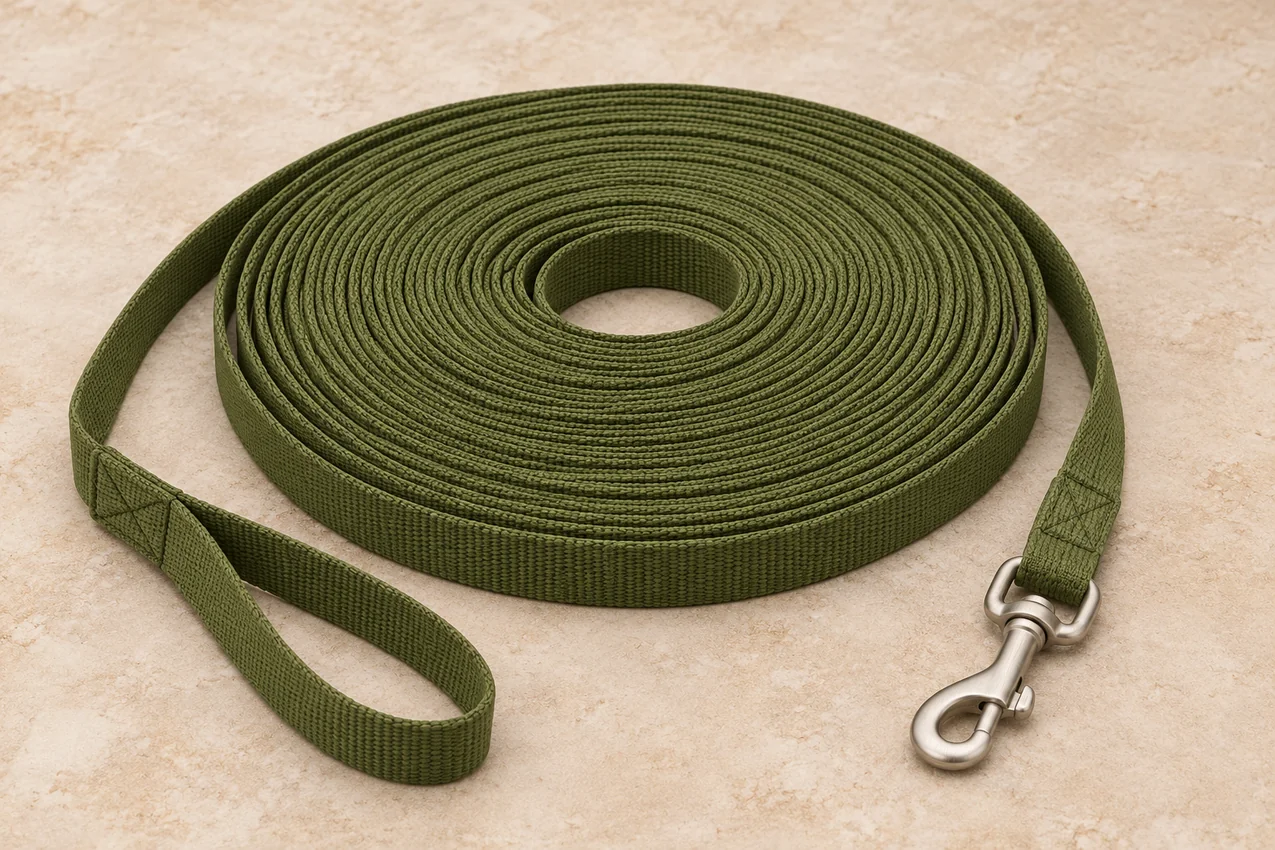
If you’re adding a dog training long line to your range, decide what customers will do with it before choosing the longest option in a supplier’s catalog. A 5-meter line for controlled exploration and a 15-meter line for recall practice make different demands on the handler. At the longer length, the webbing, snap hook and the space needed to gather the slack all matter more.
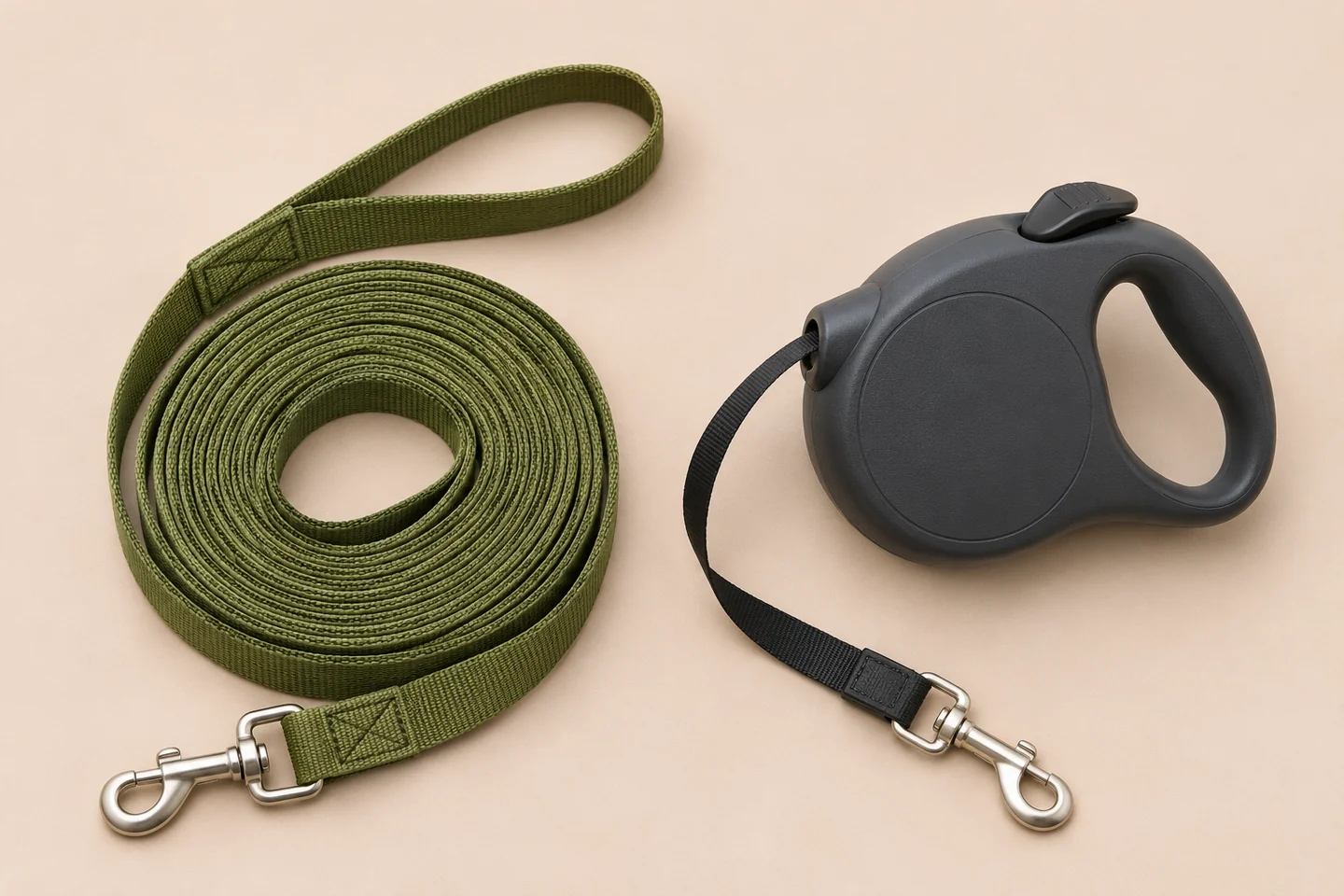
This guide covers fixed-length training lines. The handler gathers or feeds out the slack by hand. Use the length examples below to decide which finished samples to compare, then carry the same construction details into your quote.
Lengths to Compare for Your Range
| Customer use | Length to compare | What to check on the sample |
|---|---|---|
| Controlled exploration or introductory training | 3–5 m (about 10–16 ft) | Check how easily a handler can gather the line and whether the clip fits the intended harness ring. |
| Recall practice in an open area | 10 m (about 33 ft) | Compare how two constructions of the same length feel when you gather and feed out the slack. |
| Longer recall drills | 15 m (about 49 ft) | Weigh the finished line and check whether the handler can manage it after it gets wet. |
| Specialized training in a suitable open space | 20–30 m (about 66–98 ft) | Check drag, snagging and how much space the coiled line takes up in its retail pack. |
Use these examples to shortlist samples. If your packaging uses metric and imperial units, tell the supplier which dimension controls production. A 30 ft line measures about 9.14 m. A 10 m line measures about 32.8 ft.
Loop Handle or Plain Tail
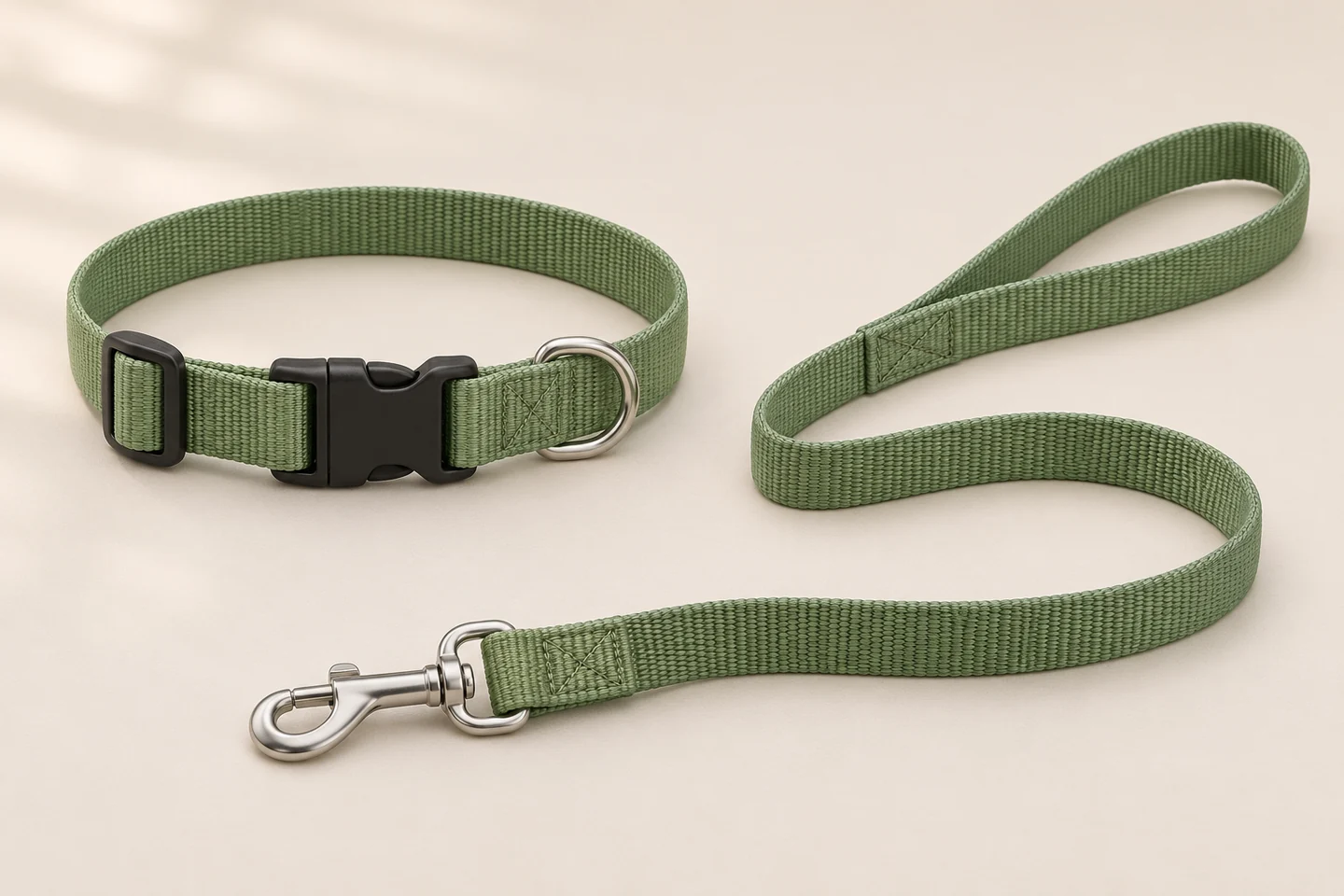
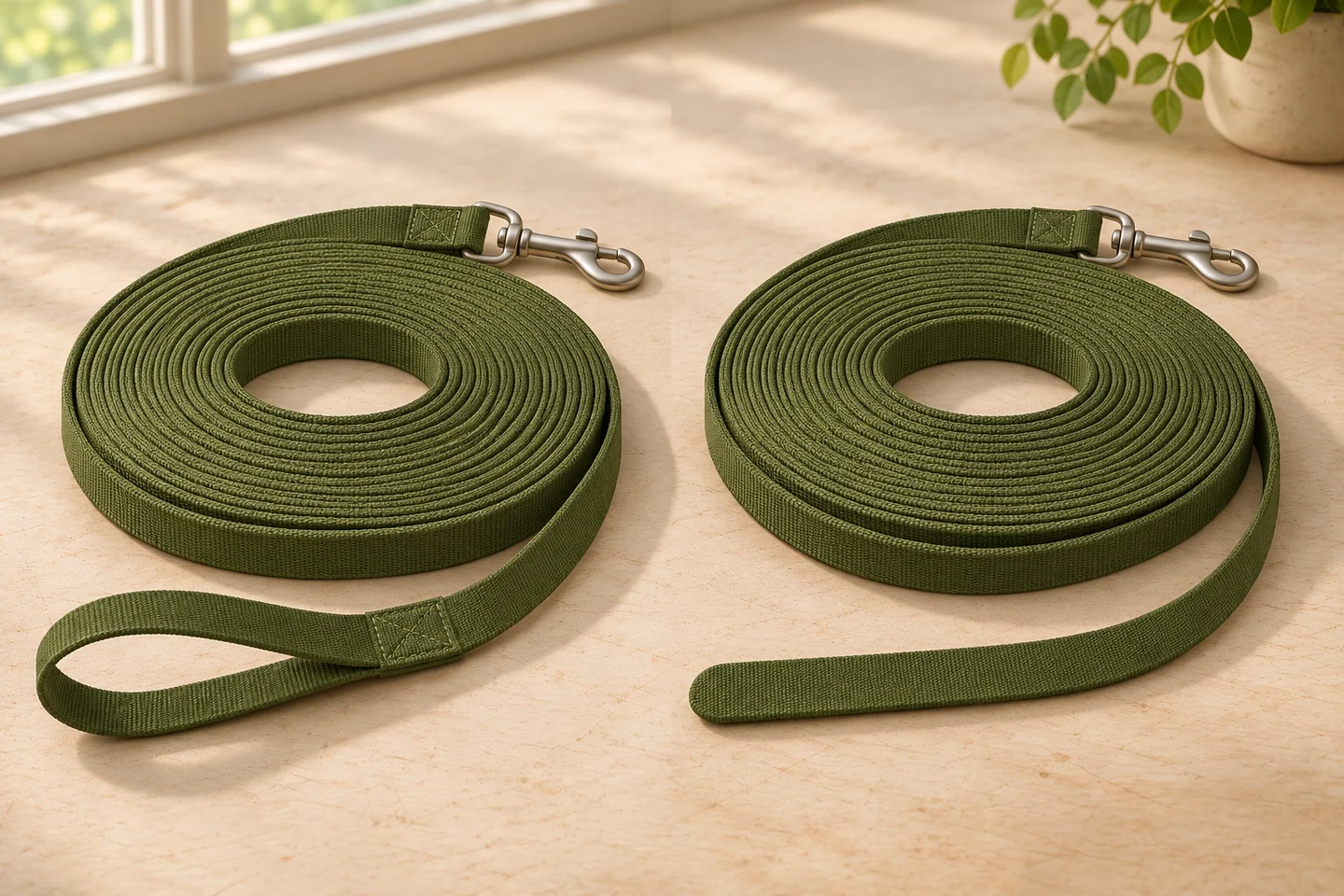
A sewn loop gives the handler a defined grip on a hand-held line. A plain tail gives a line intended to trail on the ground one less place to catch on branches or vegetation. Ask which tail the sample has and show it clearly in your listing.
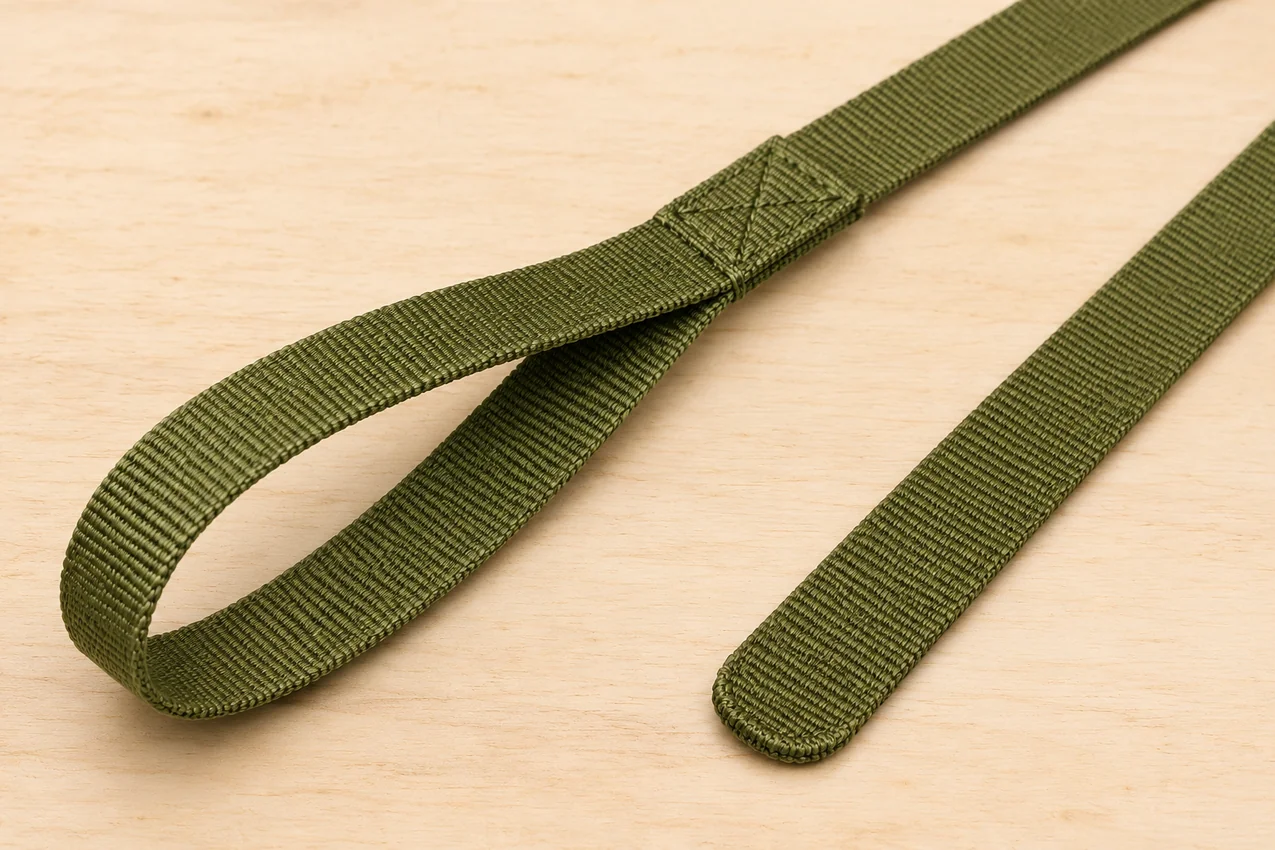
Put harness attachment, slack management and the risk of wrapping a moving line around fingers or wrists in the care or use insert. Describe the intended use as supervised training in suitable open spaces. Battersea’s guide to long-line leads.
Materials and Snap Hooks
Compare the actual webbing and a full-length assembled sample. A short swatch tells you how the edge feels. The finished line tells you what 15 meters of that material feels like after it has been through wet grass.
Nylon and polyester webbing
Nylon is a starting point for a flexible fabric line. Dense webbing adds weight, and the finish affects the feel and drying time. Polyester is worth comparing if moisture uptake matters to your buyer. Record the width, thickness and grams per meter for each webbing. Coil both samples dry and damp, and feel for rough edges.
Coated webbing and round lines
If buyers expect to wipe off mud, try the proposed coating on a finished sample. Check wet grip, flexibility when coiled and whether grit stays around the stitches or snap. If a buyer specifies BioThane®, ask for the material series and sourcing record. BioThane® is a brand of coated webbing. BioThane material FAQ.
For a round line, record the diameter, weight per meter and end connection. A thinner line can take up less space when coiled. Check how easily a handler can grip and gather the full length.
Snap hooks and end connections
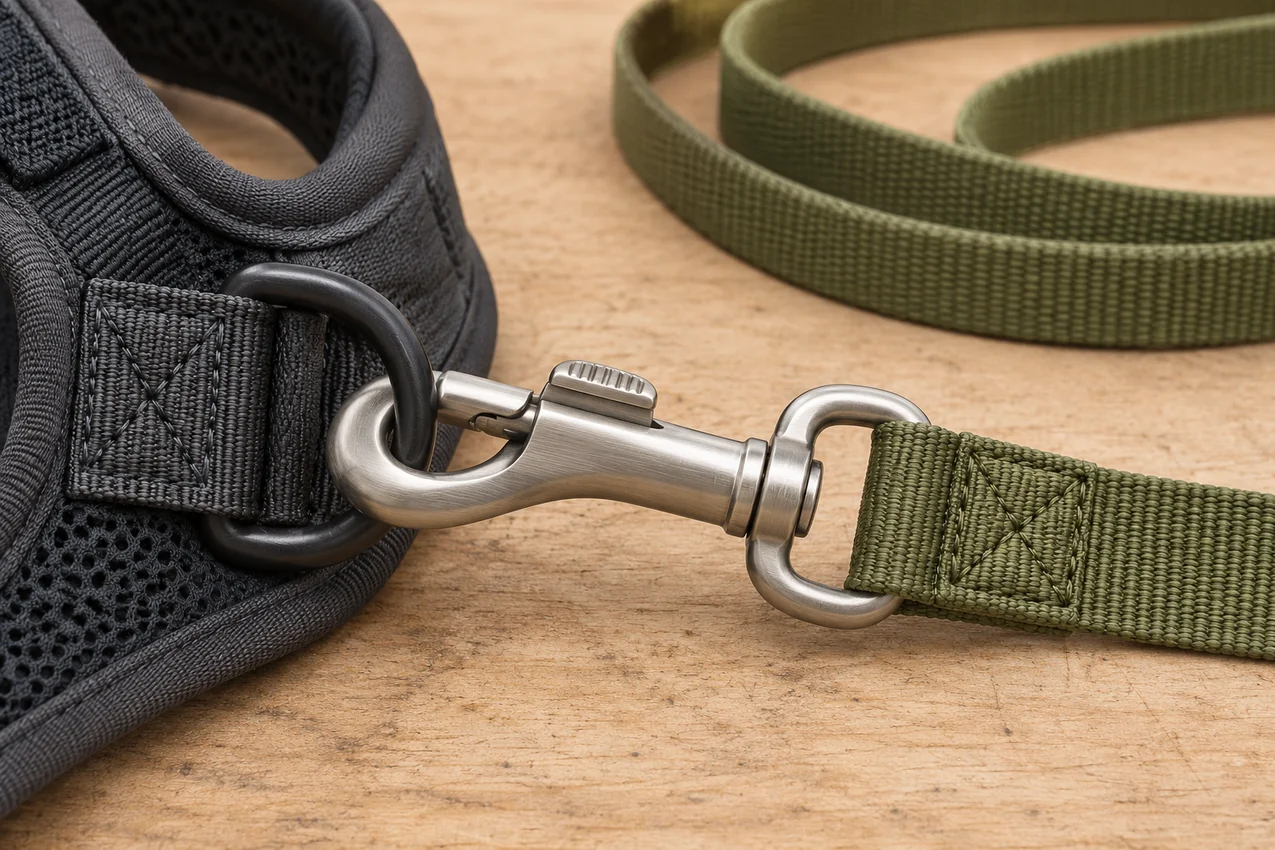
Specify the snap model, base metal, finish, weight and gate opening. Try the bolt snap, trigger snap or locking clip on the actual harness ring. Confirm that the ring fits through the gate, the gate closes fully and the swivel turns freely. A lighter clip can suit a small-dog line if it fits the ring and meets the agreed performance requirements.
What to Approve on the Finished Sample
Request a sample at the length and in the construction you want to buy. If the first sample differs from the planned bulk version, record what must change before you approve the production sample.
| Check | How to verify it |
|---|---|
| Finished length and width | Agree on the measurement endpoints and tolerances. Record whether the finished length includes the closed snap and hand loop. |
| Dry and wet weight | Weigh two finished samples of the same length dry. Wet and drain them the same way, then weigh them again. Record clip weight separately if comparing hardware. |
| Grip and handling | Gather and feed out the full line dry and damp. Observe how readily it twists, tangles or snags on the intended surface. |
| Clip fit and joins | On the bench, rotate the clip on the intended harness ring and see if the ring presses against the release. Check gate closure, swivel movement, the sewn fold and any rivets. |
| Cleaning and drying | Follow your proposed care instructions. Look for trapped grit at the seams and snap, and check how readily the line dries before coiling it. |
| Product claims | Agree on a method and acceptance criteria for the finished configuration if you intend to make a strength or durability claim. Keep results tied to the tested sample. |
Keep an approved sample and a record of the dimensions, materials, hardware model, tail style and labeling. Review proposed changes before production. Use finished-leash results for claims about the assembly.
Retail Labels and Market Requirements
Place the finished length, SKU and tail or clip style where buyers can read them without opening the pack. Show the tail end in the product listing. Match each label to its packed sample, including the material, width, hardware and actual finished length. Check shorter and longer variants separately when their construction differs.
For EU projects, confirm who is responsible for product identification, traceability, economic operator information and consumer-facing instructions before approving your packaging and listings. European Commission GPSR business guidance.
What to Ask for in a Bulk Quote
Five lengths in four colors create 20 variants before you add hardware or packaging. List the quantity you want per length and color. Ask which quantities can be combined for the MOQ and whether branded packaging has a separate minimum. If one color falls below the minimum, request a second quote using fewer colors or a shared stock material.
Request separate quotes for an existing construction with your logo and a custom version with a different width, coating or clip. For each, ask for the sample cost and timing, the unit price and inclusions, and when production lead time starts.
For each length, ask for packed dimensions per leash, units per carton, outside carton dimensions and gross weight. Confirm the webbing, hardware and pack match across the quotes you are comparing.
Example inquiry
Please quote 10 m and 15 m lines separately. We’re considering 100 units per length in black. Please confirm the MOQ per variant and quote plain packaging and branded hangtags separately.
Discuss Your Extra-Long Dog Leash Requirements
Send a product link or tell us how your customers will use the line. Include the lengths and estimated quantities if you have them.
Your Reliable Pet Products Partner
Tell Us About Your Pet Product Project
Sample Evaluation
Confirm sample availability, any charges and freight before reviewing the product.
OEM Customization
Review product-specific branding, material and packaging options before sampling.
Production Planning
Agree on production lead time and shipping handover after sample approval.
Project Follow-up
Use the same email thread to share sample comments, artwork revisions or order questions.