Dog Leash Sample Approval Checklist for Wholesale Buyers
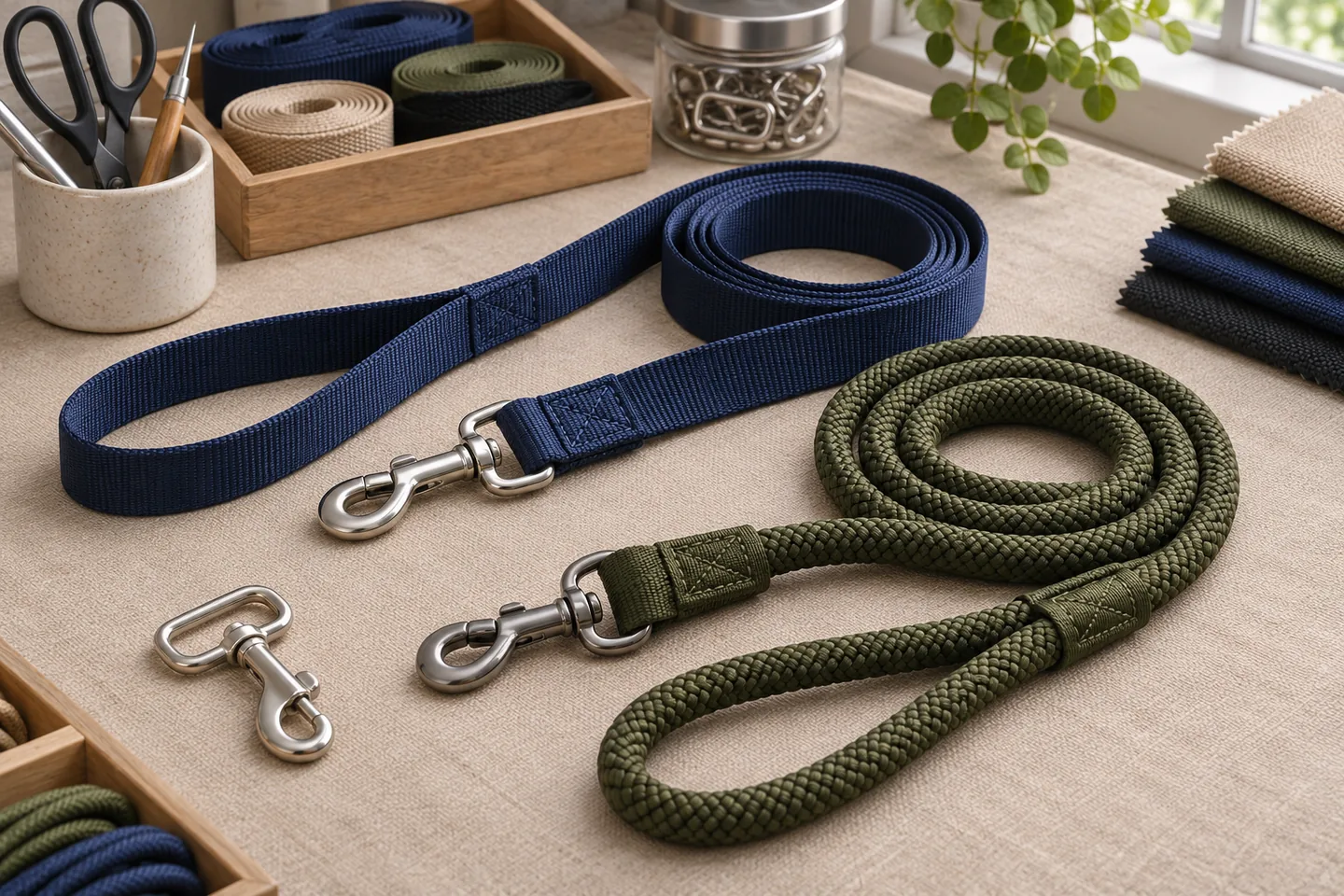
Table of Contents
You’ve approved the color and logo on your first leash sample. Then the supplier tells you the production run will use a different swivel hook. Hold off on approving the whole leash until you’ve checked the new hook and its connection on the finished sample.
Use this checklist to record what passed, what needs another look, and which sample your supplier will use as the reference for the bulk order.
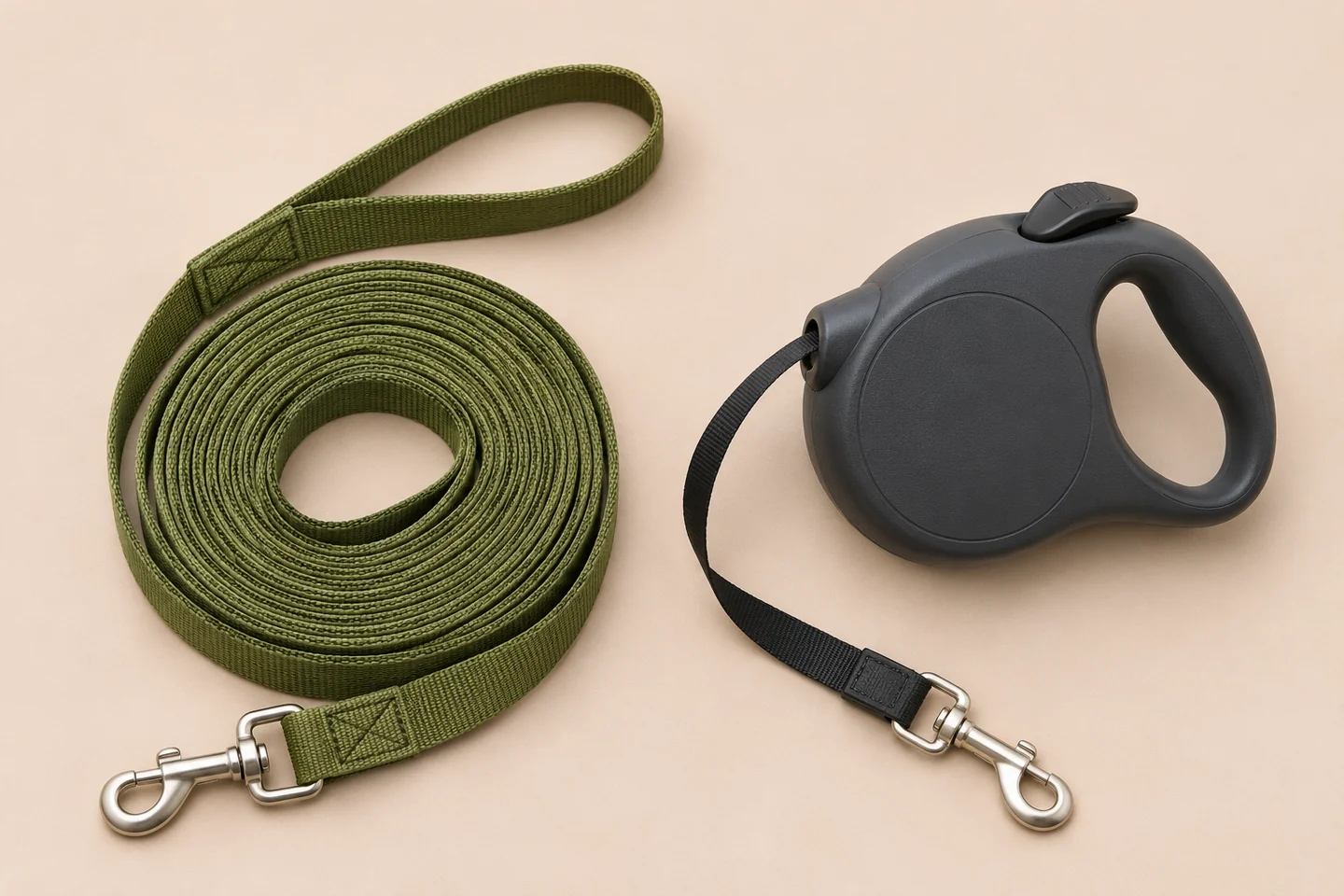
The checks below cover fixed-length leashes made from webbing, rope, or coated webbing. Retractable models need separate checks for the mechanism, brake, and lock.
Quick Dog Leash Sample Approval Checklist
Record the sample ID, SKU, specification revision and date. Mark each check Pass, Hold or N/A. Use N/A only when the check does not apply and record why. For a Hold, record what must change and how you will verify the correction.
| Check | What to confirm | Result / notes |
|---|---|---|
| Sample version | Identify any materials or parts that differ from the planned bulk order. | |
| Material & dimensions | Check the agreed material, measurement points, and tolerances. | |
| Hook, joints & handle | Check gate closure, swivel, stitching or rope ends, and grip. | |
| Claims & tests | Link required results and acceptance criteria to the finished construction and relevant variant. | |
| Logo & retail pack | Check artwork, SKU, barcode, and the finished packed unit. | |
| Production release | Close all required checks before releasing production. Record the approved SKU, sample ID, spec revision, approver and date. |
Example record — Sample V2, spec Rev B. Snap hook must match the approved reference and close fully on the target D-ring. V2 has a different hook and binds on the ring. Hold. Review V3 using the specified hook on the same ring.
1. Know Which Sample You Are Approving
A supplier may first send an existing product to show its general construction and workmanship. This is useful for comparing materials and hardware, but it may not represent your final design.
A development sample is different. It is made to evaluate proposed specifications or identify design changes.
A pre-production sample should represent the construction intended for mass production, including the agreed materials, dimensions, hardware, branding, and packaging.
For example, a first sample might use available black webbing while the bulk order requires a newly sourced color. The handle, snap hook, and stitching may also be adjusted during development.
If those changes have not been reviewed, the initial sample should not automatically become the final production standard.
Before paying for a sample, confirm what this round includes, what will change for production, what the sample, courier and revisions cost, and what starts the bulk lead time. Ask whether the order minimum applies to the whole order, each color or each SKU. Check for separate minimums on custom webbing, hardware or packaging.
If the sample is still in transit. Use photos to review logo placement and hangtag artwork. Ask for measurements on video with the sample ID and ruler in view. Arrange hands-on checks for gate return, joints and grip with the physical sample or an on-site reviewer. Record what is still open.
2. Write the Specification and Acceptance Criteria
A photograph helps communicate the appearance of a leash. It cannot fully describe its construction.
Two leashes can look almost identical while using different webbing weights, thread types, snap hooks, or methods of attaching the hardware.
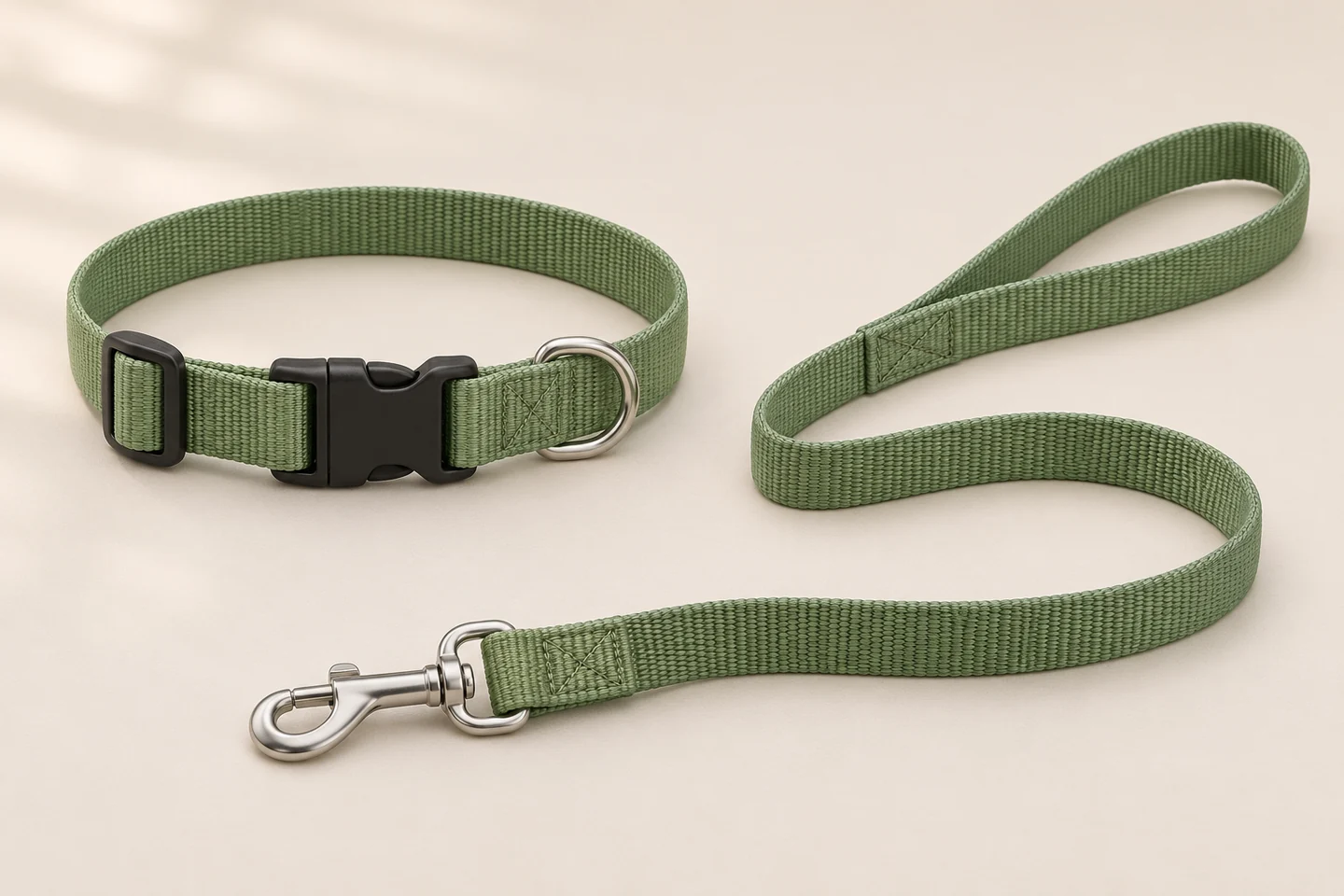
For a webbing leash, record the material, finished length and width, any thickness or weight requirements, handle construction, snap hook reference, stitching, colors, and branding.
Some specifications may require drawings or close-up photographs to make the construction clear.
If there is a padded handle, the padding material and position should be defined. If a swivel snap hook is required, the approved hardware reference should be recorded rather than described only as a "metal clip."
The specification should also establish how measurements are taken and which tolerances are acceptable.
Define what an acceptable result looks like before the sample arrives. That might be an approved hook model, an agreed measurement range, a specified end connection, or a test method with pass criteria. Without that reference, two people may inspect the same leash and reach different decisions.
A useful test of the specification is whether someone could reproduce the same leash from it six months later.
3. Check the Material Used in the Sample
Nylon, polyester, cotton rope, and coated webbing are common starting points for leash development.
But a material name alone does not tell a buyer enough about the finished product.
Nylon webbing, for example, can vary in thickness, weave, flexibility, surface texture, and weight. Two samples described as nylon may feel very different in the hand.
Look at the surface and edges. Feel the webbing when it is folded and gathered. Check whether it twists excessively or feels unusually stiff for the intended product.
For rope leashes, consider diameter, braid construction, surface feel, and the method used to finish the ends.
For coated webbing, compare grip, flexibility, surface consistency, and how the material behaves when damp.
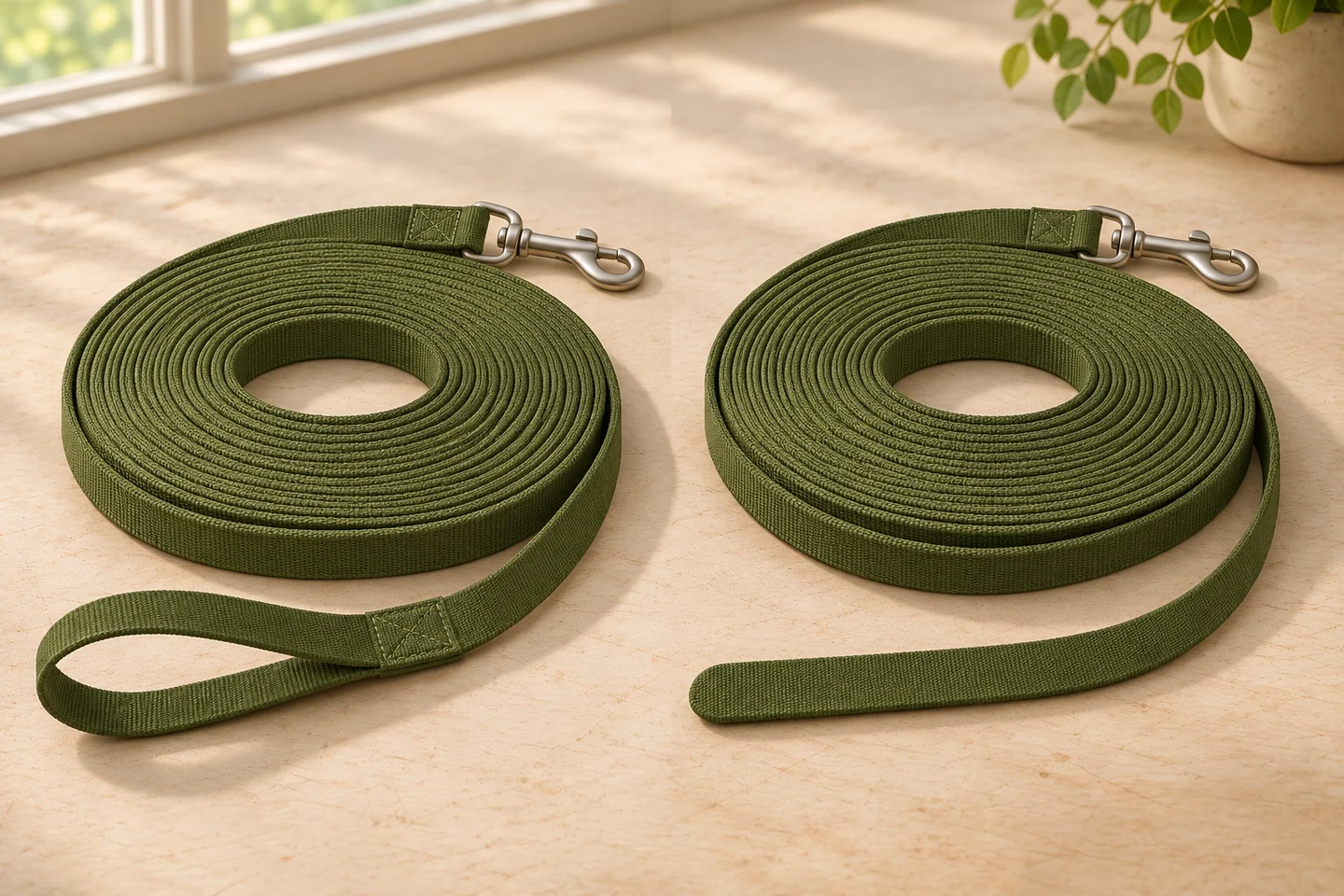
A lightweight walking leash and a long training line have different handling requirements. A material that feels suitable in a short sample may become unnecessarily heavy over a much longer length.
Where material performance claims are important, agree on the evidence or testing needed to support them.
4. Measure the Finished Leash the Same Way Every Time
Length disputes can arise even when both parties believe they followed the specification.
One supplier may measure the webbing before assembly. Another may measure the finished leash from the end of the handle to the end of the snap hook.
Record whether the stated finished length includes the handle and hardware. The method should also explain how the leash is laid out and whether any tension is applied during measurement.
Width should be measured at the appropriate section of the webbing, while thickness or diameter should be checked where relevant.
If your order also includes an adjustable model, record the usable length in each agreed configuration.
For orders sold in both metric and imperial markets, agree on which unit controls production.
A leash described as 6 feet is not precisely the same length as a leash specified at 1.8 metres.
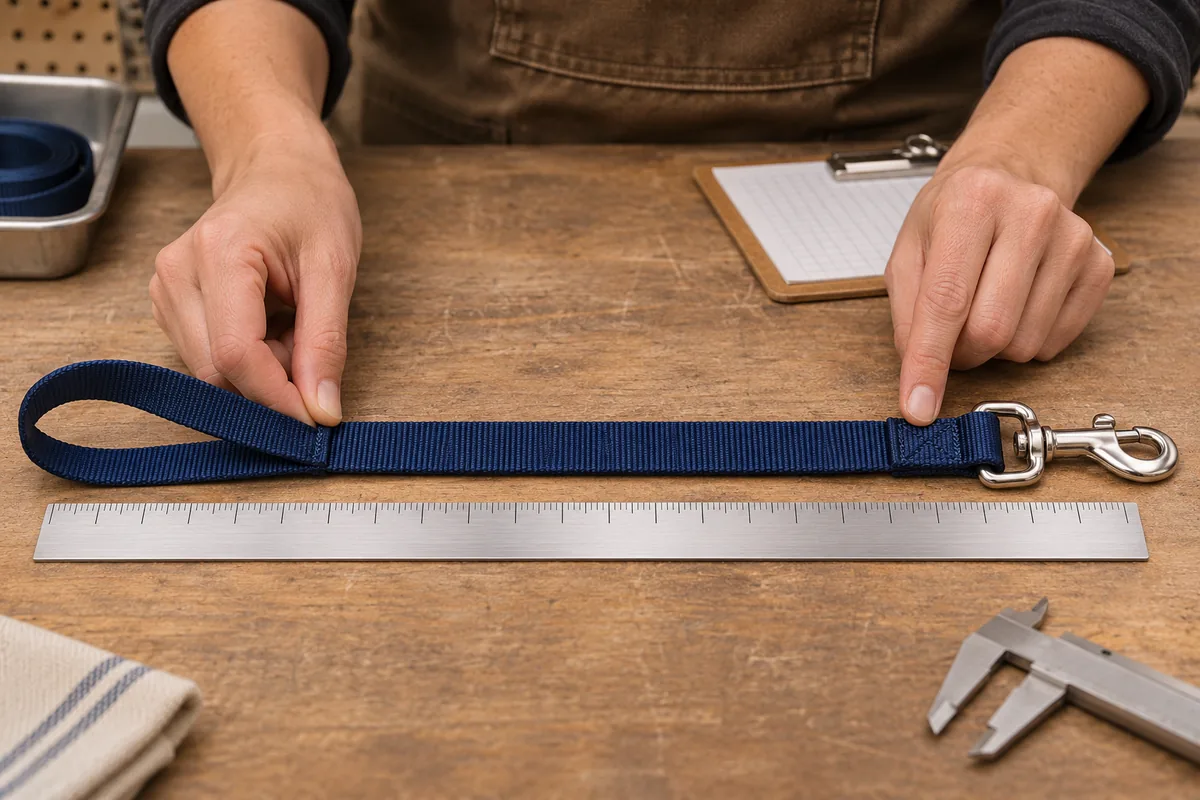
Tolerances should be agreed before production rather than negotiated only after a sample falls outside the requested dimension.
5. Evaluate the Snap Hook as Part of the Finished Leash
Buyers often focus on its appearance: silver or black finish, traditional bolt snap or trigger-style opening, swivel or non-swivel construction.
Start with the intended harness or collar ring. The hook opening must accommodate the ring, and the gate should close correctly after attachment.
A clip that is difficult to open may frustrate customers. A clip that does not close securely can introduce a more serious problem.
Rotate the swivel through its normal movement and check for sticking, unusual play, or interference with the hook.
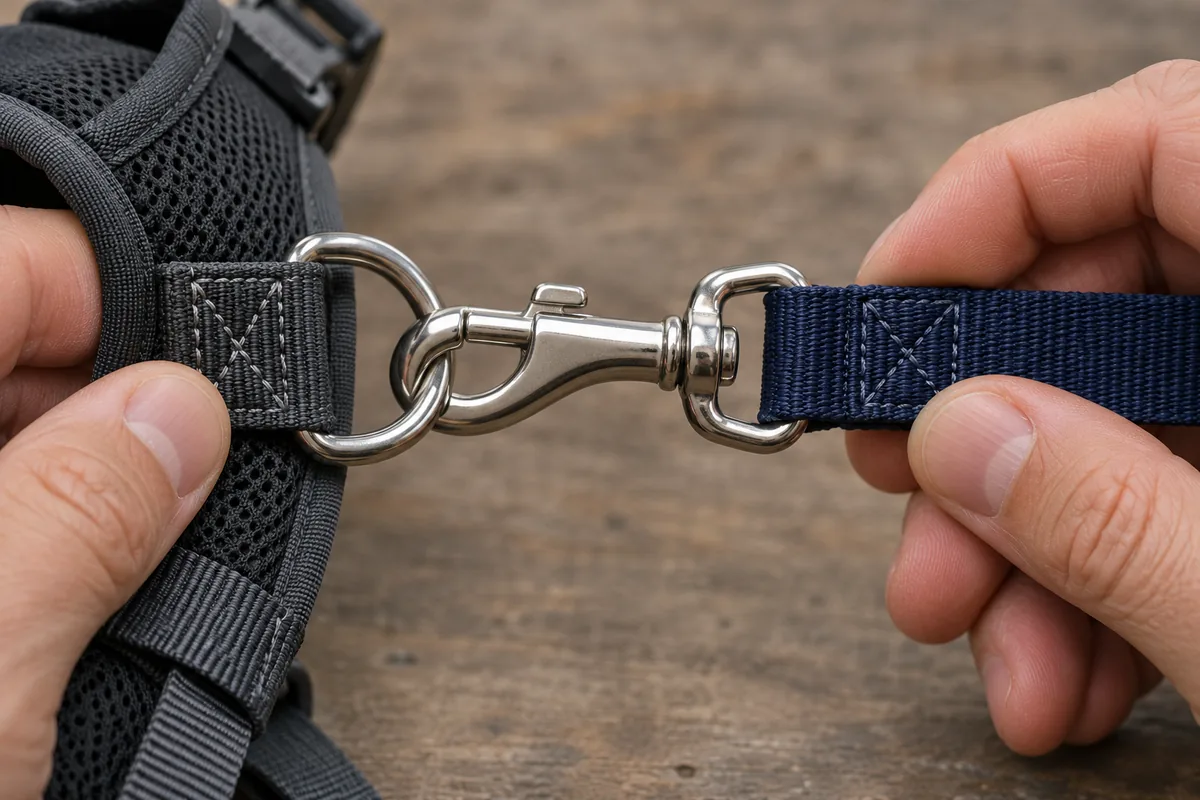
Also consider hardware weight. An unnecessarily large snap hook may be uncomfortable on a small-dog leash even if it looks substantial.
Do not assume that a particular metal finish identifies the base material. A silver-colored hook is not necessarily stainless steel, and a gold-colored component is not automatically brass.
Where the base metal, corrosion resistance, or load performance is important, specify the required component and agree on appropriate verification.
6. Inspect Stitching and End Connections Carefully
On a webbing leash, the material may be folded around the snap hook and secured with stitching. Some designs use rivets or another approved joining method.
Is the folded section the intended length? Does the stitching follow the approved pattern? Are there skipped stitches, loose ends, damaged webbing, or exposed edges?
If rivets are used, inspect their positioning and finishing.
An attractive stitch pattern should not be treated as proof of strength. The thread, webbing, fold arrangement, stitch construction, and loading direction all influence the performance of the assembled connection.
The handle attachment deserves similar attention.
A padded handle may look comfortable, but the padding and outer fabric should not hide an unfinished or incorrectly constructed joint.
For a rope leash, the review may involve stitching, splices, bindings, or other end connections.
Any strength or durability requirement should be evaluated on the relevant complete construction, using an agreed method.
7. Does the Leash Feel Right in Normal Handling?
A sample can meet its dimensions and still feel wrong.
Hold the handle. Gather the leash. Clip and unclip the snap hook. Fold and coil the material as a customer would.
A label edge may rub your hand, a thick handle may feel bulky in smaller hands, and stiff webbing can be hard to coil.
For a long training line, the full-length weight and ease of gathering deserve more attention than they would on a short walking leash.
For coated products, check the grip and cleaning experience under relevant conditions.
These are handling observations, not substitutes for performance testing.
Avoid using an actual dog to perform improvised strength tests. Controlled testing with suitable equipment is a better way to evaluate specified loads.
8. Agree on Testing Before You Need the Results
If the supplier sends a pull-test result, start by asking what was tested.
A supplier might provide the breaking strength of a webbing material, the rated capacity of a snap hook, or a result from a completed leash assembly.
For a finished-leash claim, check that the report identifies your sample or SKU, hook, webbing or rope, and end connections. Ask which variants the result covers and flag any differences for review.
If you need evidence to support a product claim or retailer requirement, define the test before the sample is approved.
For a load-related test, the agreement may need to identify the complete configuration, method of loading, test direction, duration or rate, number of samples, acceptance criteria, and how failures are recorded.
Other projects may need to evaluate corrosion, colorfastness, abrasion, cleaning, or the durability of a particular decoration.
The required evaluation should reflect the actual design, intended use, market requirements, and claims made about the product.
A sample subjected to a destructive test should not subsequently be treated as an undamaged reference for approving appearance or workmanship.
Avoid borrowing a strength figure from an unrelated leash simply because the products look similar.
9. Approve Branding on the Actual Finished Product
A logo that looks clear on a computer screen may not work at the intended size on the actual leash.
Woven labels, printed logos, rubber patches, embroidery, and engraved hardware have different limitations.
When checking the sample, consider the logo’s position, size, legibility, color, and attachment.
If the label sits near the handle, make sure it does not create an uncomfortable edge.
If a printed logo crosses a folded section, review how it looks and behaves during normal handling.
Brand colors may also appear different on webbing, rubber, ink, and metal finishes.
Where accurate color reproduction matters, compare the decoration against an agreed physical reference.
The same principle applies to reflective patterns and other visual features.
The approved appearance should be evaluated under conditions that make the intended effect visible. A reflective detail should be reviewed with an appropriate light source rather than judged only from a daylight photograph.
Branding approval should be based on the finished product, not only artwork or component samples.
10. Packaging Is Part of Sample Approval
A leash may pass every construction check and still arrive at a retailer with the wrong label or packaging.
Check whether the leash fits the proposed packaging without excessive folding or pressure.
A hangtag should remain readable and attached in the intended position. A paper sleeve should hold the product securely without obscuring important details.
If individual bags are used, confirm their size, closure method, and any required labeling.
The packed product should match its stated length, color, material, and SKU.
If you use GS1 GTINs, assign a unique GTIN to each sellable size and color combination. Match those numbers to the finished retail packs.
A barcode that looks correct on the artwork proof should also be checked on the finished retail unit.
It may become difficult to scan if it is folded around the package, covered by another label, or printed at an unsuitable size.
Where marketplace fulfillment is involved, the applicable platform and account-specific preparation requirements should be reviewed separately.
11. How Many Variants Need Sample Approval?
Three lengths in four colors give you twelve sellable variants. How many need their own finished-leash test?
Two colors using the same verified webbing, hardware and assembly method may be covered by one documented test plan. Check color match, colorfastness, labels and packaging as applicable. If a color requires a different dyeing process, coating, mill or finish, document which results still apply and which checks must be repeated.
However, changing webbing width, hardware model, connection method, or another important component may justify a separate assembled sample and further testing.
Buyers should agree with the supplier and qualified testing or quality personnel on which configurations require individual evaluation.
12. What Happens When the Sample Fails?
Suppose the leash measures correctly, the color is acceptable, and the packaging looks good, but the snap hook does not close reliably.
The correct response is to hold approval of the affected construction until the cause has been addressed and the necessary evidence is available.
A small logo-position discrepancy might be corrected through revised artwork and a new decoration proof, provided the change does not affect the assembled product.
An incorrect material, insecure connection, failed performance requirement, or misleading label may require a revised physical sample.
Agree on critical, major and minor defect criteria before inspection. Hold the affected SKU if the gate fails to close, a load-bearing joint is insecure, or a required test fails. Review evidence of the correction before releasing it.
For each issue, record what failed, how it was observed, what will change, and which checks need repeating.
A photograph with an annotation is often more useful than a message saying "Please improve the quality."
Record the disposition of the whole sample separately from approval of individual items.
| Decision | Meaning | Next Step |
|---|---|---|
| Approved | All agreed approval requirements are satisfied. | Release the identified sample and spec revision in writing. |
| On Hold | Information, testing, or corrections remain unresolved. | List open items and required evidence. Hold release for the affected SKU. |
| Rejected | The submitted construction does not meet essential requirements. | Revise the design or submit a new sample. |
13. Make the Approved Sample Reproducible
The approved physical leash is important, but it should not be the only production reference.
Keep a written specification, material descriptions, component references, measurements and tolerances, approved artwork, and packaging details.
On the approval record, include the SKU, sample ID, specification revision, approved items, open items, approver, and date. Reference the signed record and spec revision in the purchase order and inspection checklist. Agree who retains the approved physical sample and where the inspector can access it.
Photographs of the handle, snap hook, stitching, labels, and packed product can make later comparisons easier.
Where material colors are important, retain the approved color reference.
If the supplier proposes a different hook, webbing, thread, or joint after approval, ask for the exact replacement and the SKUs it affects. Review the change and any new sample or test evidence before authorizing it in writing.
A seemingly small substitution may alter handling, appearance, or performance.
For repeat orders, refer back to the same approved specification and record any changes as new revisions.
14. Verify the Bulk Order Against the Approved Sample
Bulk inspection serves another purpose: checking whether produced goods match the approved standard.
For appropriate lot-by-lot attribute inspection, buyers may use an agreed sampling plan based on a recognized approach such as ISO 2859-1.
The sampling level, acceptance quality limit, defect categories, and inspection arrangement should be defined for the order.
AQL does not mean that a buyer can automatically accept a certain percentage of dangerous products.
Critical safety concerns require appropriate handling under the agreed quality and product safety requirements.
Also, routine visual sampling does not replace any necessary performance testing.
For example, a pre-shipment inspection may confirm packed quantities, workmanship, label accuracy, and carton markings before the goods leave the supplier.
If inspection finds a different hook model or unreliable gate closure, hold the affected lot. Record the SKU, lot, and defect with clear photos or test evidence. Agree on the correction and reinspection criteria before deciding whether the lot can ship.
For a first order with new hardware or a new end connection, agree on an early production check. Compare the first finished units with the signed sample and spec revision while the factory still has time to correct a mismatch.
15. Check What Documentation Your Market Needs
Before signing off, ask your retailer which reports and packaging documents it needs. Match each report to the SKU and the actual hook, material, and joint construction being ordered.
For EU sales, check the General Product Safety Regulation (GPSR) requirements that apply to your role, including risk assessment, technical documentation, and product identification. A company that places the leash on the market under its own name or trademark should check its manufacturer obligations under Article 13.
References EU General Product Safety Regulation · ISO 2859-1 sampling · GS1 guidance for size and color variants
16. Questions to Settle Before Approving Bulk Production
Before releasing the order, match the purchase order to the signed sample record and confirm each SKU has passed the applicable checks.
- Does each sellable SKU match its approved specification and barcode?
- Does the purchase order identify the signed sample and spec revision, and can the inspector access the reference?
- Are any sample or revision charges still open, and is the event that starts the bulk lead time documented?
- Does the order require written approval before any material or component substitution?
17. Example of a Sample Approval Email
A brand is reviewing the second sample of a nylon walking leash. The logo and hangtag artwork are ready. The swivel hook is heavier than the agreed reference and the handle padding is thicker. Here’s how the buyer could record the decision.
Sample V2 — On hold
The logo position and hangtag artwork are approved. Please send V3 with the agreed swivel hook and thinner handle padding. We’ll check the hook action and handle feel on the revised sample and review any required test evidence. Please wait for written approval before starting bulk production.
Discuss Your Dog Leash Sample
Have a leash sample to review, or a design you want to develop for your brand? Send AnimalGamesLove a product photo, reference link, or short description with your estimated order quantity. If you have a specification sheet or retailer requirements, include them. We can review your project details and clarify the information needed for sampling and a quotation.
Your Reliable Pet Products Partner

Tell Us About Your Pet Product Project
Sample Evaluation
Confirm sample availability, any charges and freight before reviewing the product.
OEM Customization
Review product-specific branding, material and packaging options before sampling.
Production Planning
Agree on production lead time and shipping handover after sample approval.
Project Follow-up
Use the same email thread to share sample comments, artwork revisions or order questions.