Compare second handle positions on finished samples
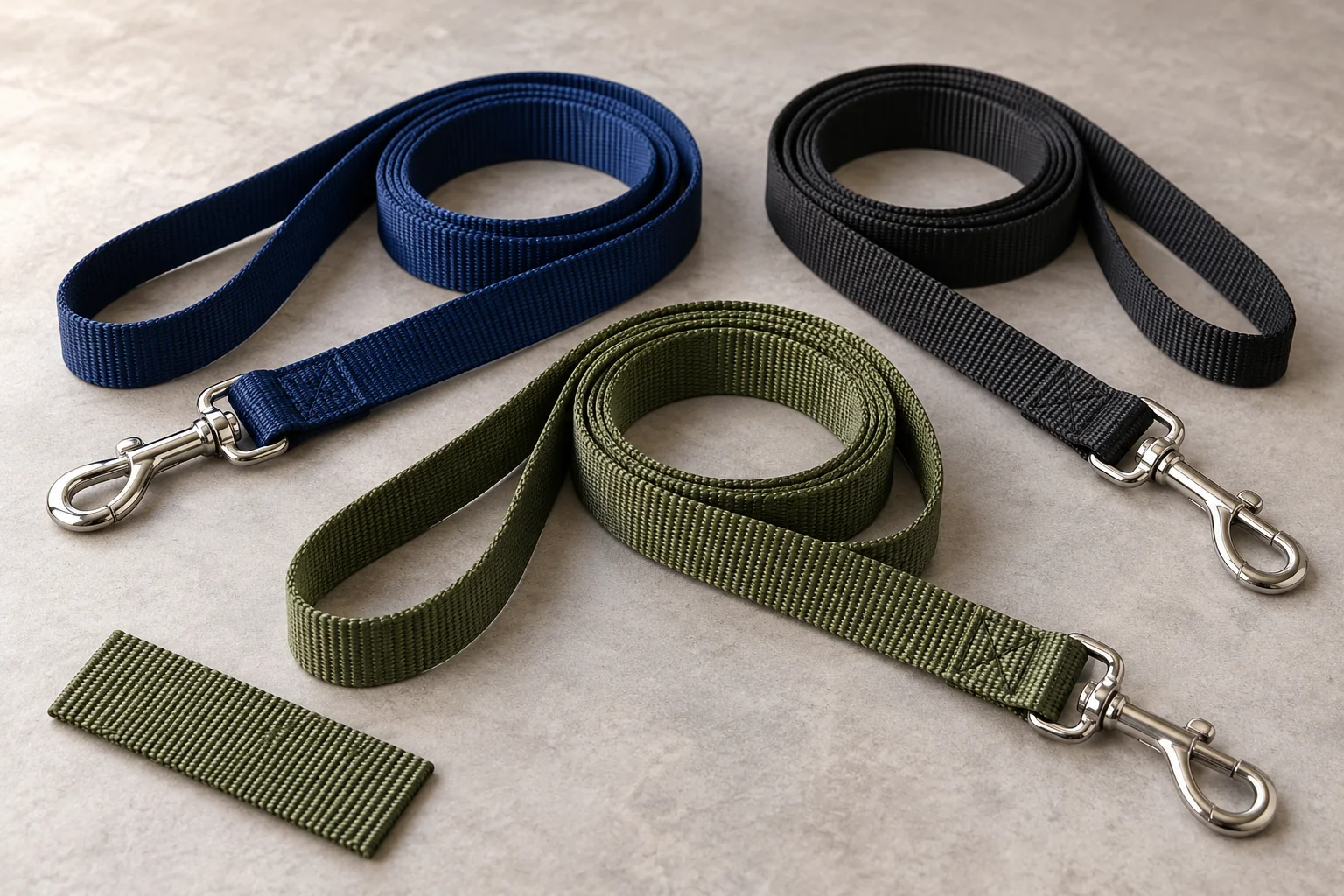
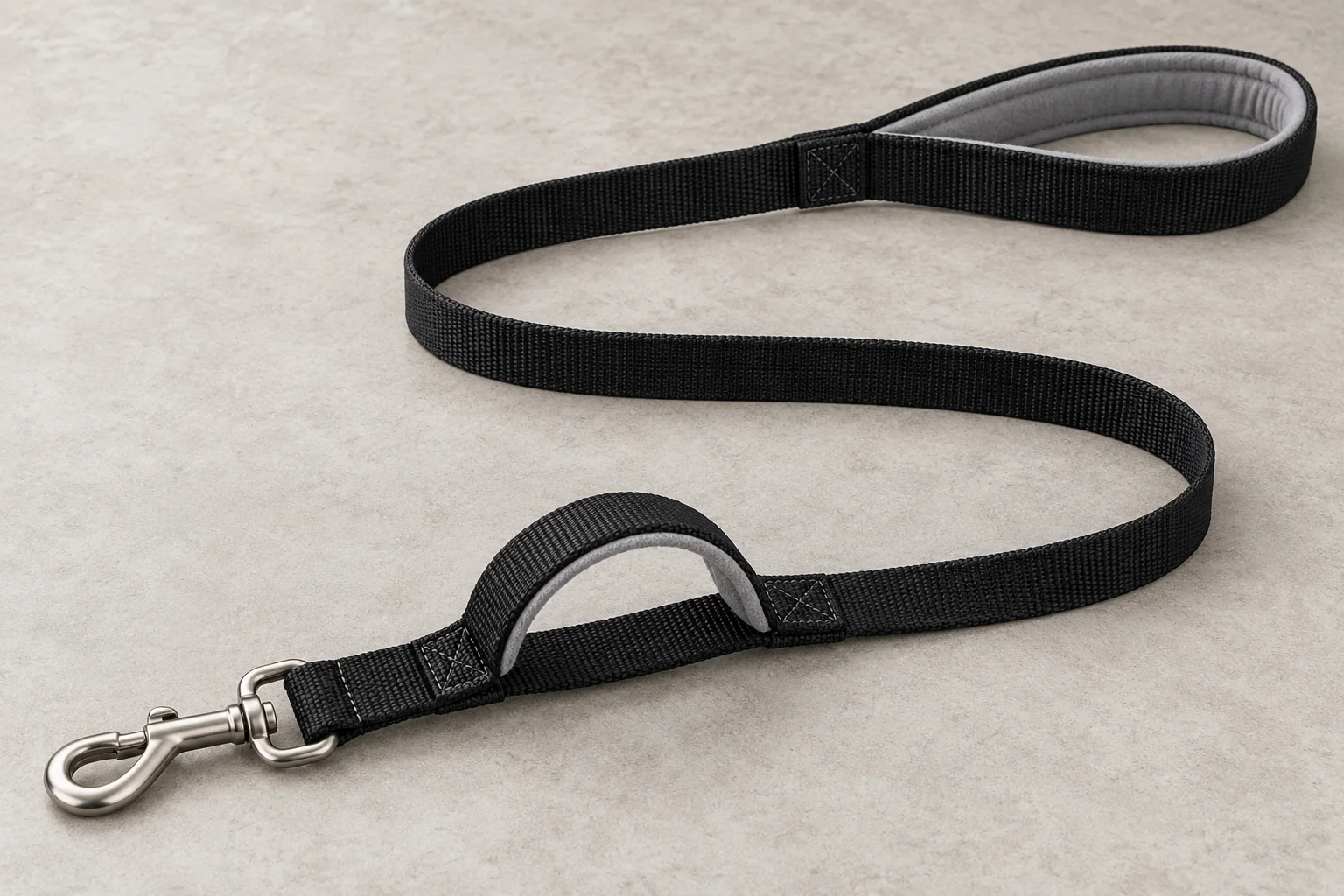
When evaluating double-handle leash samples, I would pay particular attention to where the second handle sits. It is easy to compare webbing colors and hook finishes. It is harder to judge handle placement without holding the finished leash.
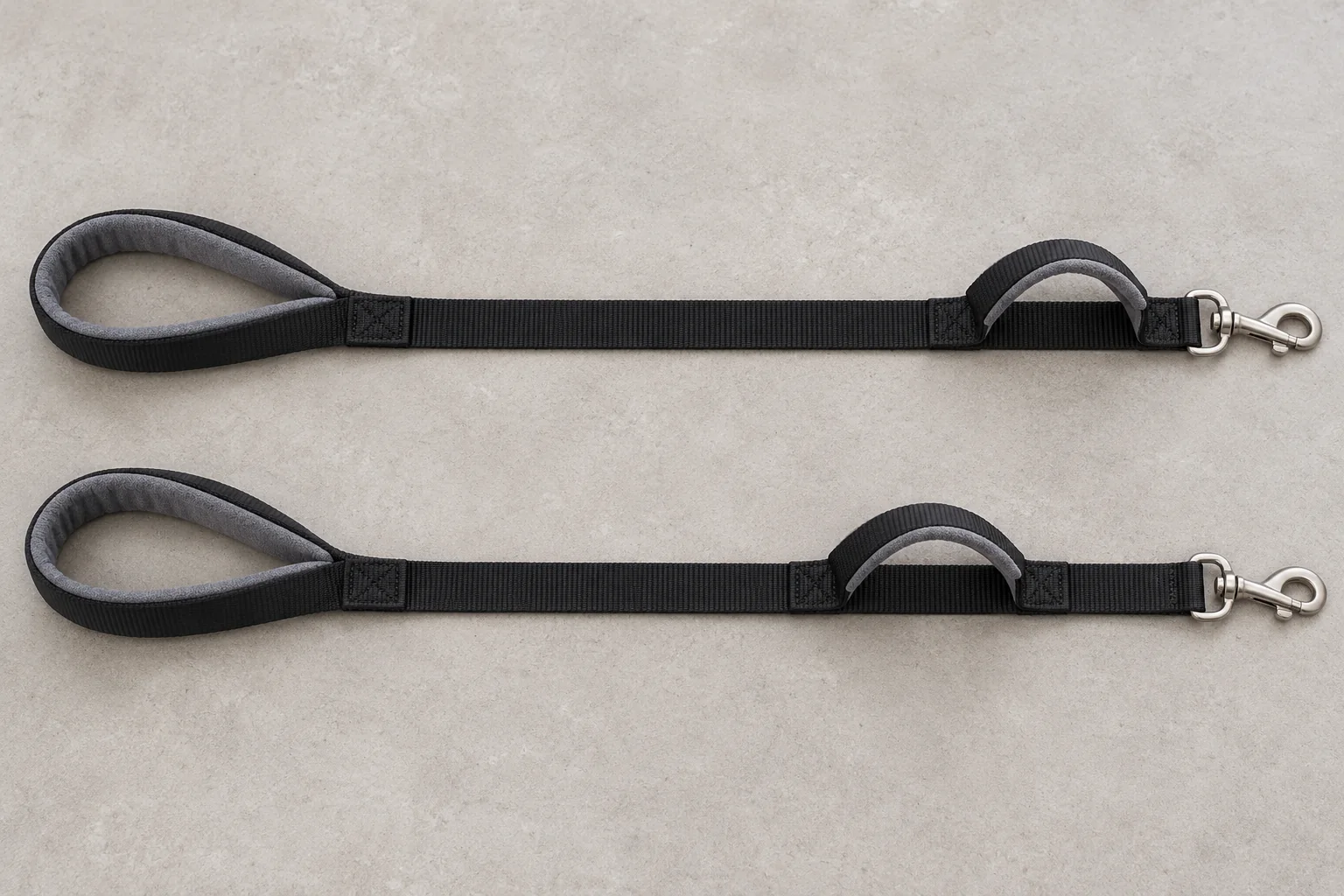
The useful distance between the traffic handle and the dog's attachment point affects how closely the dog can be held. There is no single position that suits every leash, handler and intended dog size range. Copying a competitor's dimension without checking the finished assembly can leave you with a handle that is difficult to reach or uncomfortable to use.
The relevant measurement should be clearly defined. For example, suppliers and buyers need to agree whether they are measuring from the hook to the beginning of the grip, the center of the handle opening, or another reference point. Two suppliers can quote the same nominal handle position while measuring it differently.
Use the same reference when comparing samples
A marked photo is usually clearer than a long description of where a handle should sit. Show the measurement start and end points and include the hook in the reference: changing its size or shape can alter the usable distance even when the sewn handle stays in place. Agree on the dimension and tolerance after reviewing the finished construction.
For a practical comparison, ask for two or three handle positions while keeping the webbing, hook and handle construction unchanged where possible. If other components also change, record those differences instead of attributing every change in handling to the handle position.
- Label each sample and mark the same measurement points on its photo or drawing.
- Compare the gripping position for the intended handler and attachment height. Note whether reaching the short handle requires an awkward bend or crowds the hand near the clip.
- Move between the main and short grips in a controlled handling check. Record whether the opening is easy to locate, the loop twists, or a folded section presses against the hand.
- Check how the unused handle lies against the leash. Consider gloves if they are relevant to the target customer.
- Choose the next revision from those observations. Record the approved position and orientation, rather than approving an unidentified sample by appearance alone.
These are usability observations, not proof of strength. Keep mechanical performance evaluation separate from a handling comparison.
Check the orientation as well as the distance
A handle that sticks out prominently may be easier to locate, but it may also make the leash bulkier or more likely to catch on nearby objects. A low-profile handle may look cleaner, yet could be harder to grab with gloves or during a quick transition.
Photograph the selected handle both flat and held in its intended position. That gives the supplier a clearer reference than a request to make the loop "easier to grab."
One detail I would not approve from a product photograph is how naturally someone can reach the traffic handle. The loop may look perfectly placed when the leash is flat, but feel awkward once it is attached to a dog. If a cleaner-looking layout competes with a grip that is easier to reach, I would prioritize the handling experience. The second handle should earn its place through use, not by making the product look more technical.
Choose padding for each grip rather than by appearance
Many double-handle leashes use padded handles. Padding can improve comfort, especially when the webbing is firm or tension is concentrated across the hand. A heavily padded handle may become bulky, hold moisture differently, or make the product less compact. A thinner handle can feel cleaner and lighter but may be uncomfortable if the material has rough edges or limited flexibility.
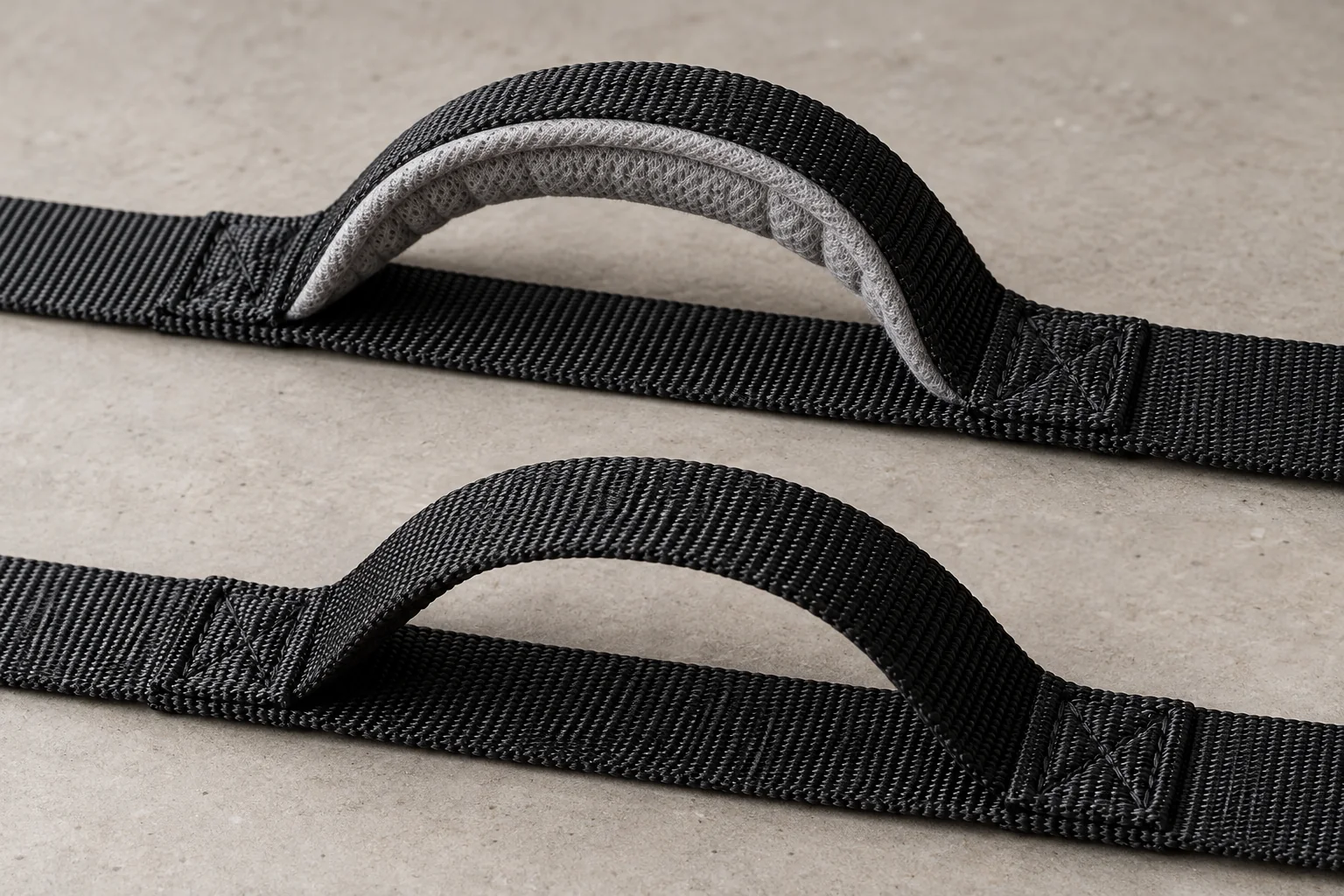
The main handle and the traffic handle are used in different ways. The main handle may be held for an extended walk. The shorter handle may be gripped for briefer periods when close positioning is needed. It is worth considering whether both handles need identical padding and construction.
For a price-sensitive range, it is worth putting two options side by side: padding on both grips, and padding on the main grip with a simpler short handle. If the extra padding makes little difference to comfort, the less bulky version may be the better product. But if the traffic handle feels harsh against the hand, removing padding just to save cost is a false economy.
When reviewing each sample, hold both handles in their intended positions. Check whether the edges press against the fingers, where the padding begins and ends, and whether the joined section creates a hard or bulky area. Keep any uncomfortable seam or fold visible in the feedback photo so the next sample addresses the cause.
Review the traffic handle connection closely
"Reinforced stitching" is not a complete specification. A visible box-X pattern can be part of an appropriate joining method, but its appearance alone does not establish connection strength. Review the webbing, overlap, thread, stitch placement and workmanship together.
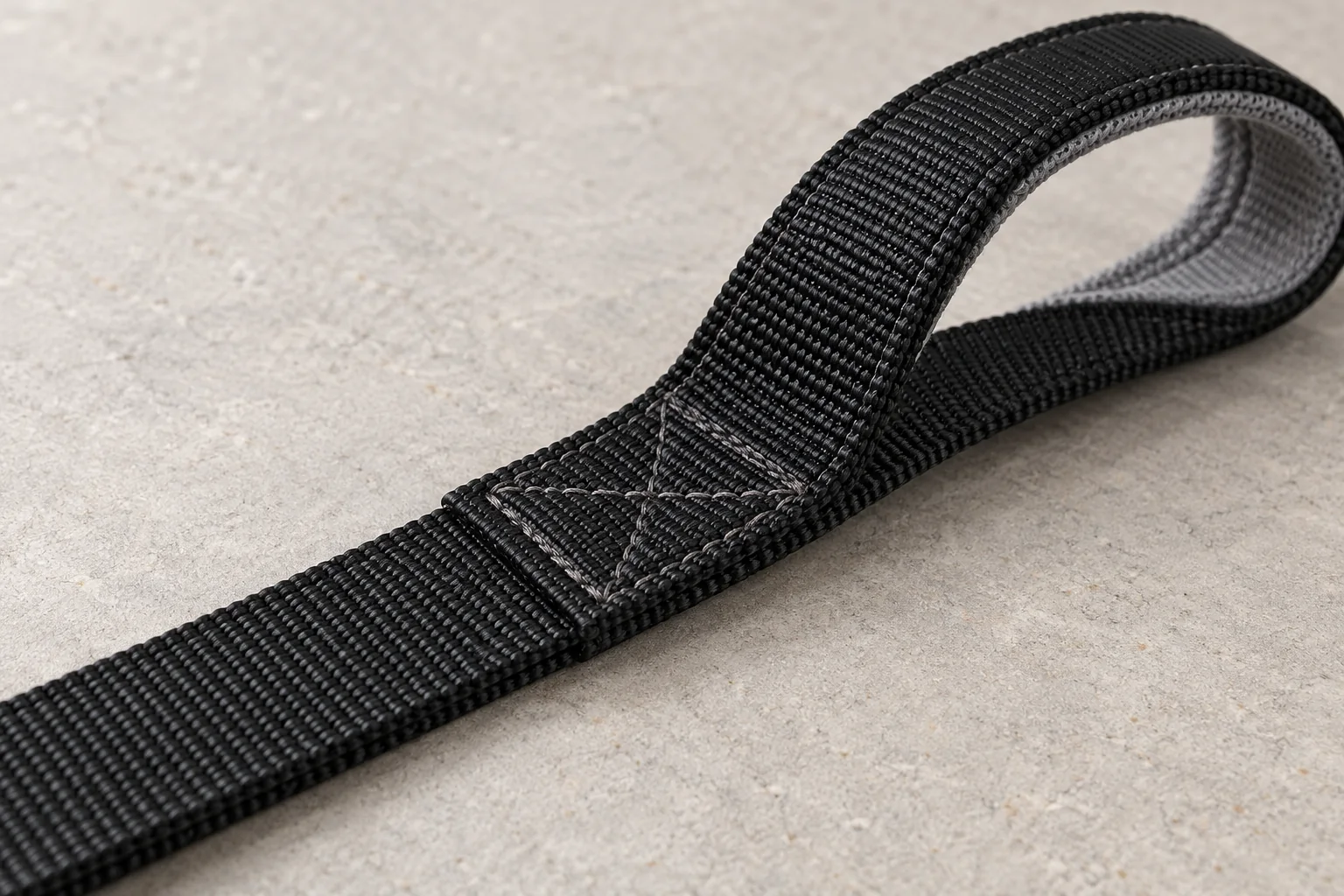
When the traffic handle is used, the applied load and the way it travels through the leash can differ from normal use of the main handle. Inspect where the handle joins the main webbing. Look for inconsistent folds, skipped stitches, loose thread ends, distorted material, and irregular stitch placement.
Keep close-up photographs of the selected attachment, with a scale where dimensions matter. Record the joining details needed for production and inspection. The traffic handle connection should be included in the relevant performance evaluation, rather than assumed to be covered by a test of a different joint.
Describe the revision you need
If the short handle feels loose or bulky, "make it stronger" may send the supplier in the wrong direction. Identify whether the problem is the opening size, folded thickness, orientation or position. Ask the supplier to explain the proposed construction change before making the next sample.
For example, feedback could read: "The short grip twists when held, and the folded section presses against the fingers. Please review the handle orientation and fold construction. Keep the current hook and main webbing unchanged, and identify any other component changes in the revised sample." This is a revision request, not an instruction to skip any performance evaluation the change requires.
Match the hook to the complete leash
Buyers may be offered different hook sizes, styles, base materials, finishes, and swivel constructions. A large, heavy hook can make a leash look substantial, but it may be poorly balanced for a smaller product. A lightweight hook may feel better in hand, but its suitability must be assessed against the intended application and required performance.
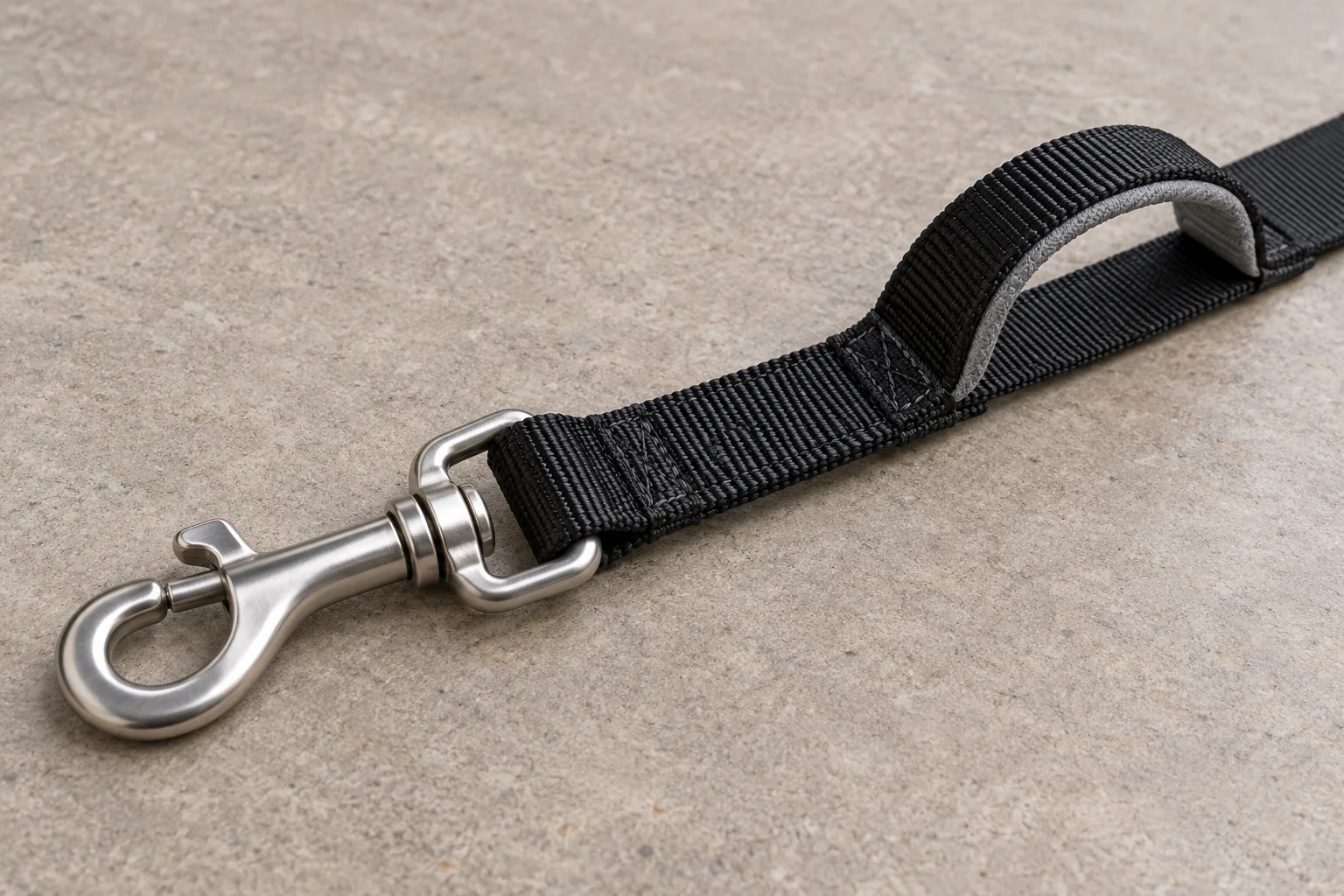
On the finished sample, check the gate operation, swivel movement and any rough edges contacting the webbing. Confirm that the hook fits the intended collar or harness attachment. For a matching range, compare the metal finishes under the same light.
These observations are useful, but they do not establish load capacity or corrosion resistance. If your product requires particular performance claims, testing methods and acceptance criteria should be agreed upon for the relevant components and finished assembly.
The hook also belongs in the traffic-handle review. After changing its size or shape, check the usable distance and hand clearance again. A component that looks similar in a catalog may change the way the short grip feels on the finished leash.
Turn sample approval into a usable production reference
Settle traffic-handle position, orientation and comfort first. There is little value in finalizing a custom label or retail card if the short grip still feels awkward. With the basic design working, review the webbing, joining details and hook, then move to colors, branding and packed presentation.
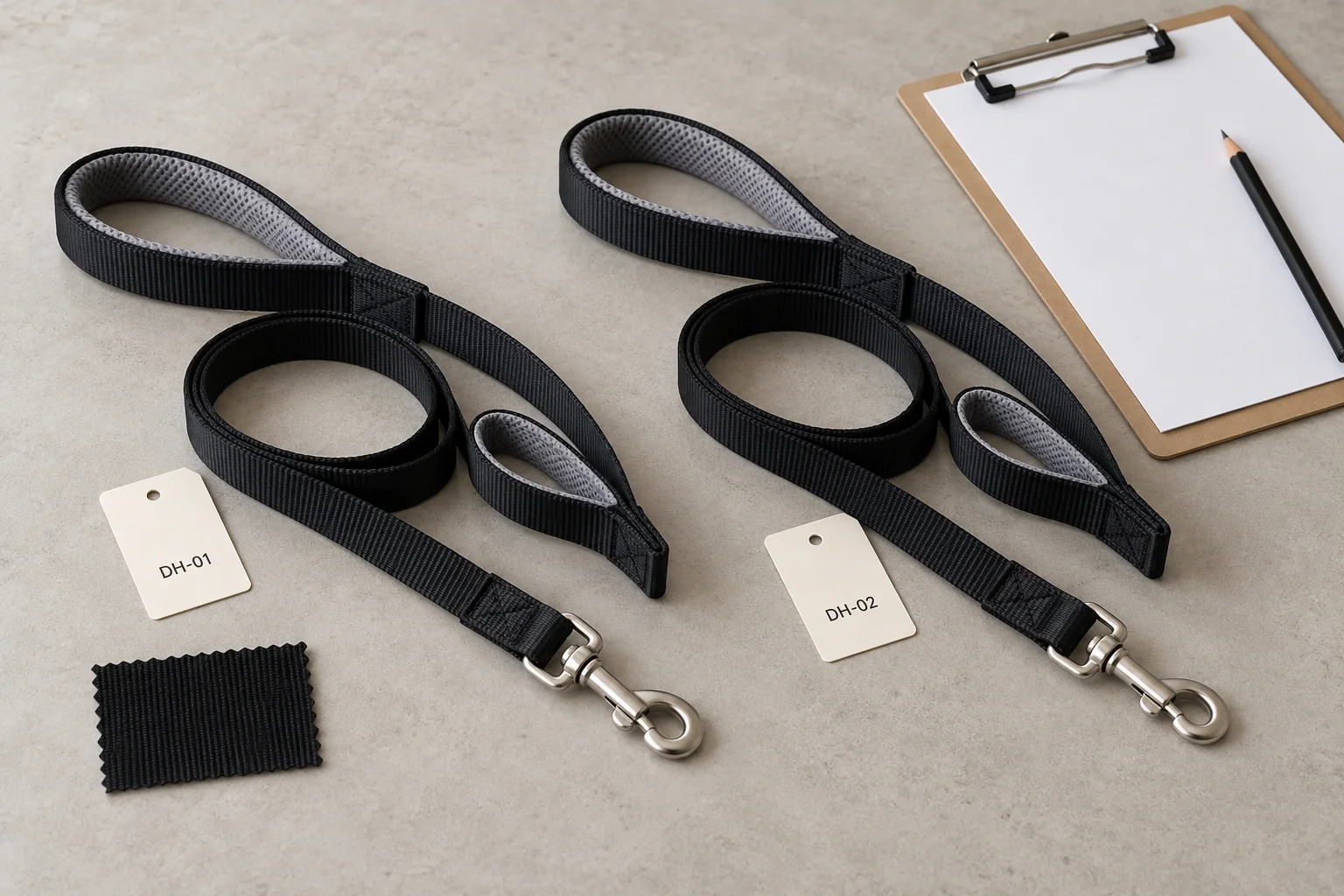
The QC checklist below is a starting point, not a universal pass/fail standard. Link each item to the actual drawing, component reference, approved sample or test evidence that applies to your design.
Inspection area | Reference to confirm |
|---|---|
Finished dimensions | Length, traffic-handle position and measurement reference points |
Both handles | Opening size, orientation, padding, seams and approved handling observations |
Webbing and joins | Material reference, width, thickness, folds, thread and stitch construction |
Hardware | Hook reference, gate and swivel operation, finish and attachment |
Workmanship | Loose threads, fraying, skipped stitches, distorted webbing and uneven folds |
Branding and packaging | Approved artwork, placement, retail presentation, labels and barcodes |
Order identification | Correct version, size, color, SKU and approved substitutions |
Performance evidence | Required reports or test-plan references for the exact assembly version |
For example, "check second handle position" is only a reminder. An inspector also needs the approved dimension, the measurement start and end points, the tolerance and the relevant drawing or sample. Keep these together so small production differences can be judged consistently.
What a useful sample approval note looks like
The production team does not necessarily need another blank form. It needs to know which version is approved, what changed, and what is still unresolved. This fictional example shows the level of clarity worth aiming for:
Illustrative note — DH-02: The traffic-handle position and orientation shown in marked photo DH-02-A are approved for appearance and handling. The main webbing and hook remain as in DH-01. The revised joining detail and any required assembly performance evaluation are still pending. Do not treat this version as approved for bulk production until those items are closed.
The approval note separates an accepted handling decision from unfinished technical approval. Keep the physical sample and marked photograph identifiable; if a later component changes, update the version and review which approvals still apply. “Looks good, please proceed” cannot do that job.