Table of Contents
A sourcing guide to rope dog leashes for wholesale buyers
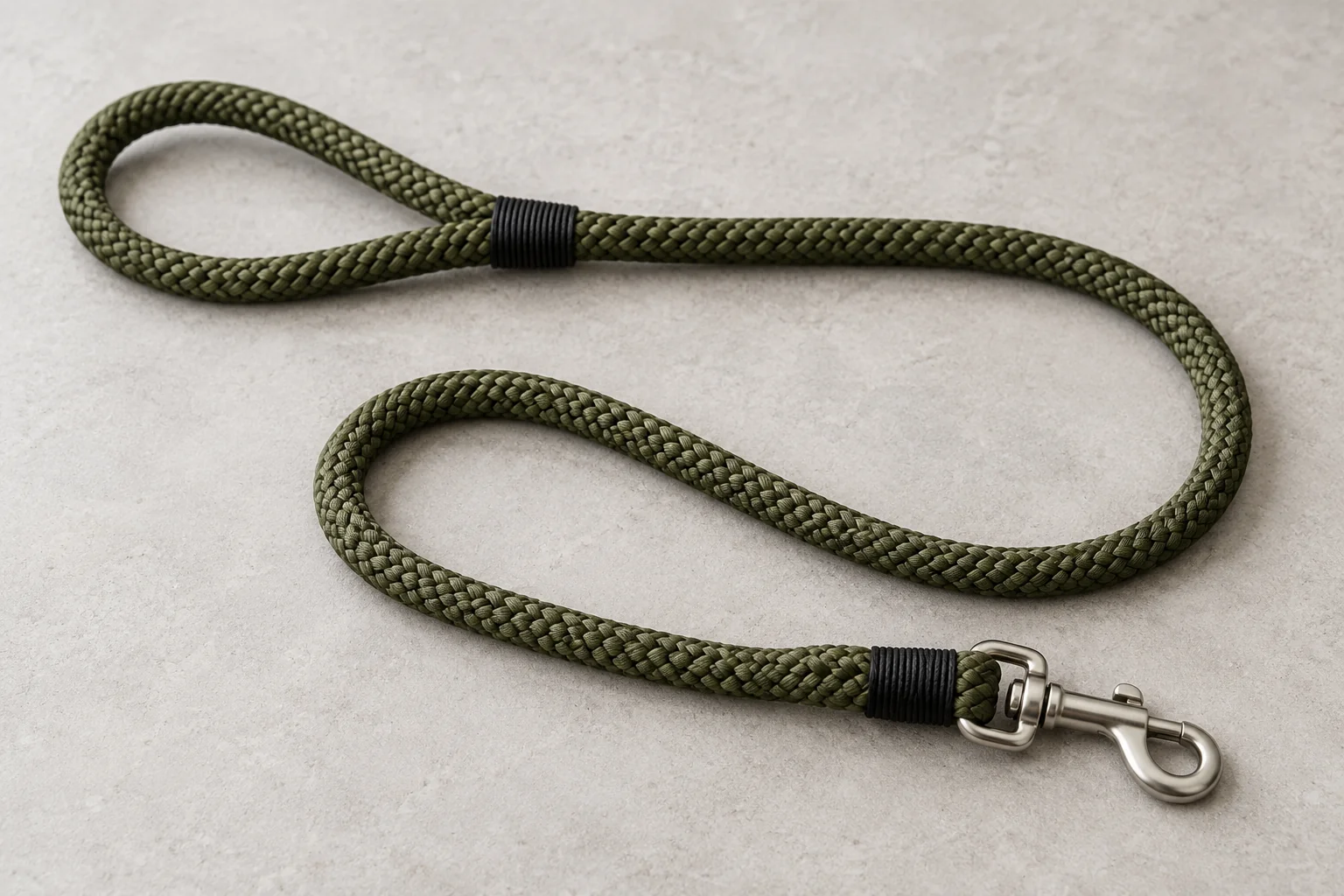
A neat thread wrap can make rope dog leashes look finished and premium. But what is actually keeping the rope attached to the snap hook? The visible sleeve or wrapping may tell you very little about the joint beneath it.
That is where I would begin a sourcing discussion. Two leashes can use the same nominal 10 mm rope and similar hooks yet have different braid structures and end connections. Before choosing the most attractive finish, a buyer needs to understand how the rope is secured, how the assembly handles and what still needs to be verified.
For importers and private-label brands, this guide explains how rope construction, diameter, handles and hardware affect the finished leash, with particular attention to the end connections. It also shows how to compare samples and prices without mistaking appearance checks for performance evidence.
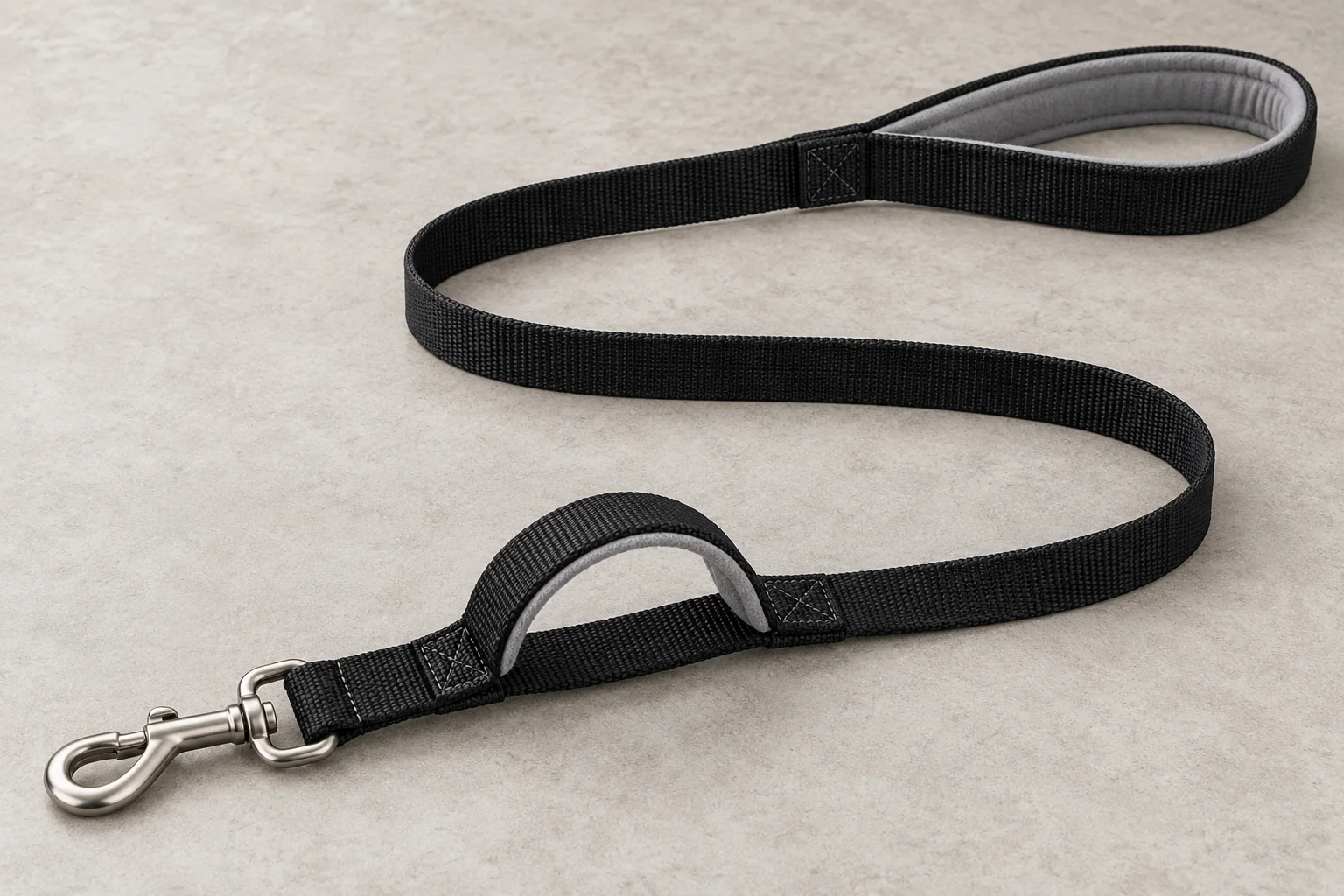
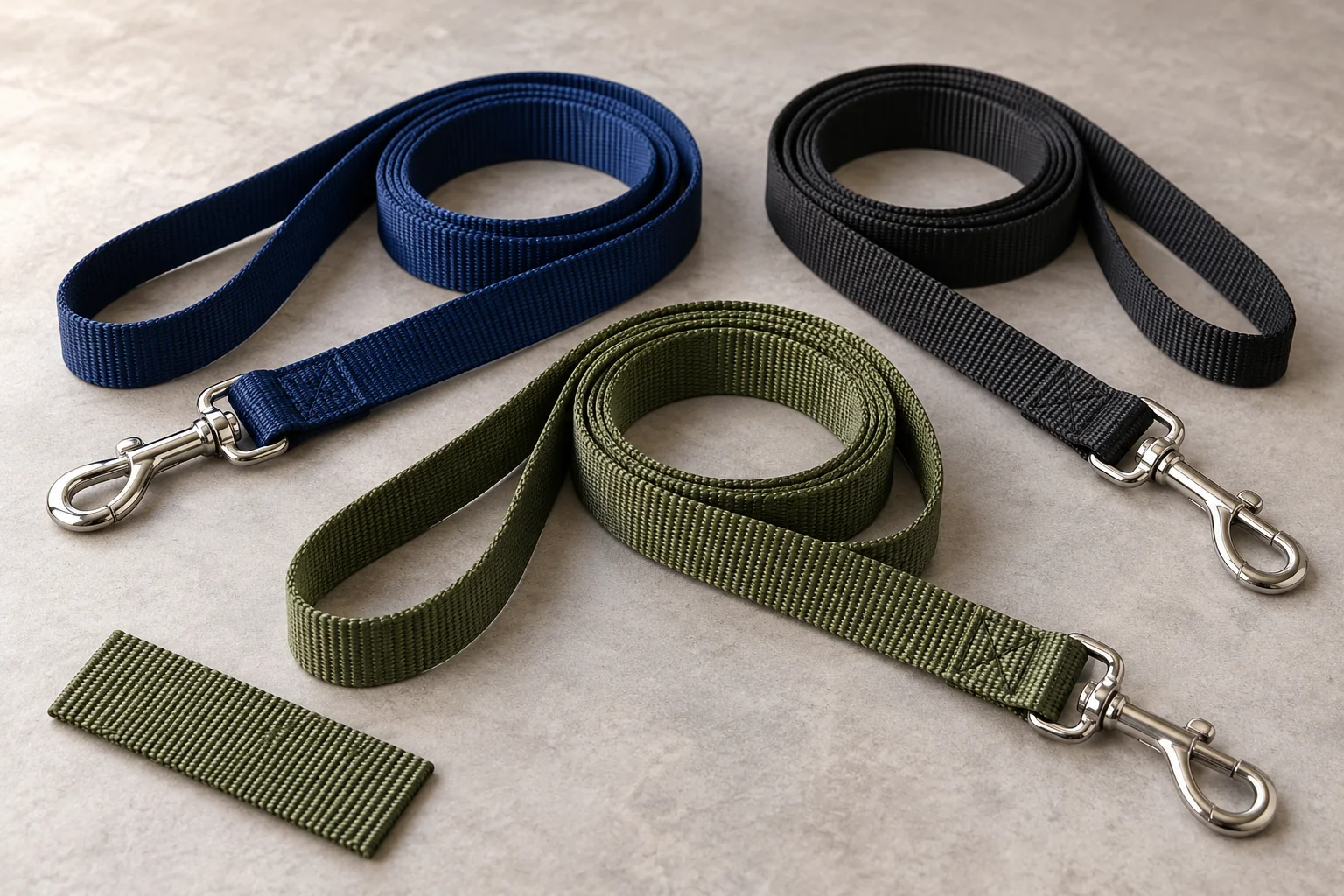
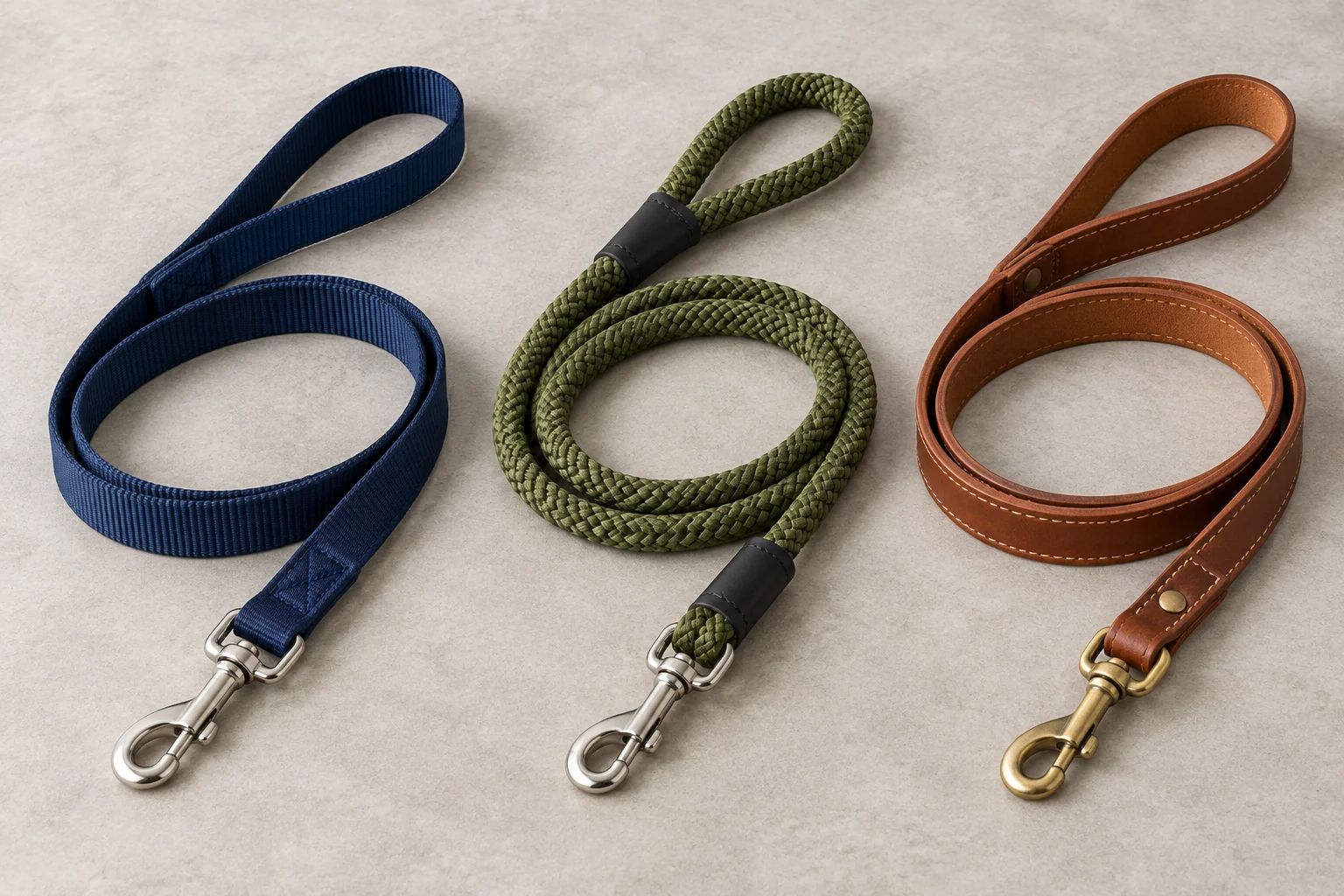
Images are AI-generated product illustrations, not actual product photographs or performance evidence.
Start with the product your customer will use
Before comparing rope diameters or braid patterns, think about where the finished leash will be sold. A rope leash designed for an outdoor-inspired pet brand may need a different appearance and feel from one intended for an everyday retail collection. A lightweight leash for smaller dogs and a more substantial leash marketed toward larger dogs should not automatically share the same construction. The difference is not only mechanical. It is also about comfort, handling, weight, and product positioning.
Imagine two buyers looking at the same green braided rope sample. One wants a compact, lightweight leash that is easy to carry. The other wants a more substantial product with distinctive hardware and a premium outdoor appearance. The same rope might be acceptable for one project and unsuitable for the other. That is why I would define the product direction before spending too much time comparing small price differences between rope suppliers.
A useful starting point is a reference photo, an intended retail channel, and an explanation of what the buyer likes or dislikes about an existing leash. You do not need every dimension finalized at this stage. But you should know what kind of product you are trying to create.
Compare rope diameter on the finished leash
Diameter is often the first specification buyers receive. A supplier may offer 8 mm, 10 mm, or 12 mm rope options. These are examples of possible dimensions, not standardized dog-size ratings. The natural assumption is that a larger diameter means a stronger, better-quality leash. That assumption can be misleading. Two ropes with the same nominal diameter may differ in fiber composition, braid density, internal construction, flexibility, weight, and tensile performance.
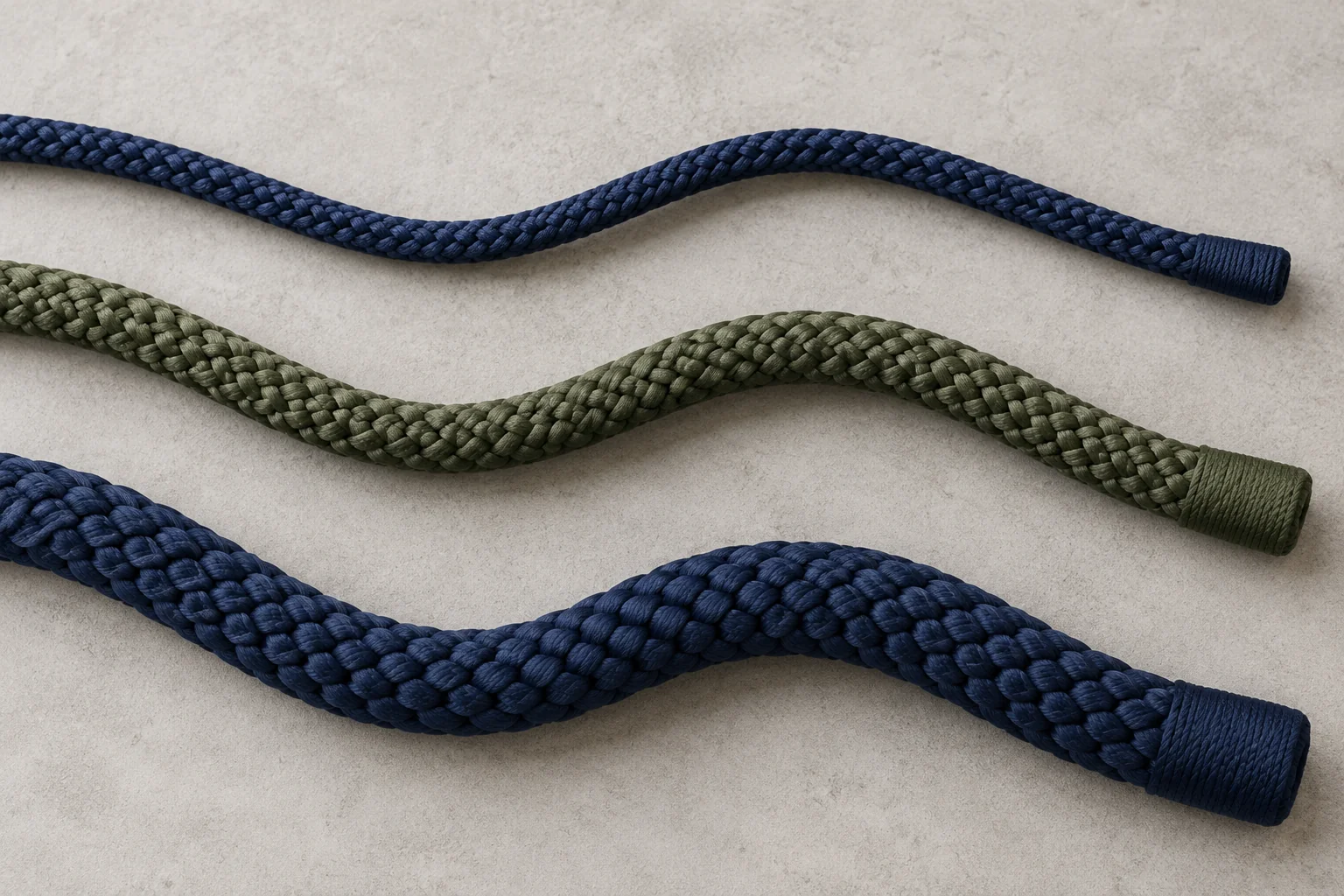
A thicker rope may also contain a different proportion of core and outer braid. Diameter tells you how large the rope is. It does not, by itself, tell you how the finished leash will perform.
Consider weight and grip comfort
A larger-diameter rope may feel substantial in the hand. That can support the appearance of a rugged product, but there is a trade-off. Thicker rope can add weight and bulk, making the leash harder to coil compactly and changing how much rope sits in the hand. Compare the handle opening separately: its size depends on the loop dimensions, not rope diameter alone. On the other hand, a thinner rope can be easier to handle and package, but it still needs to satisfy the intended product's performance requirements.
The best diameter is not necessarily the largest one available. It is the one that creates a reasonable balance between handling, appearance, weight, and the required performance of the complete assembly.
Compare diameter under the same conditions
When approving rope dimensions, make sure the supplier explains how the diameter is measured. Soft braided rope can change shape slightly when compressed or placed under tension. An approximate catalog diameter may not be sufficient if you intend to use the measurement for production acceptance. Agree on a measurement method and suitable tolerance, then record the approved reference. For practical sample comparison, I would rather evaluate two or three finished leashes with the intended hardware than choose a diameter from a list alone.
Check the braid and internal construction
The braid is one of the main reasons customers choose rope leashes over flat webbing. It creates texture, shape, and visual identity. But braid construction is more than a design feature. It can influence flexibility, firmness, surface feel, dimensional stability, and how the rope behaves when bent or loaded. Different rope constructions may include braided covers, internal cores, or other arrangements depending on the product design. Two ropes can look similar from the outside while being built differently.
Tight braid versus soft hand feel
A tightly constructed rope may feel firm and maintain a relatively structured shape. That may suit certain leash designs, but excessive stiffness can make the product uncomfortable to coil or hold. A softer rope can feel pleasant immediately. However, softness alone does not establish quality. Buyers also need to understand how the construction maintains its shape and how it performs under the intended conditions. I would not approve a rope simply because it feels soft during the first thirty seconds of handling.
I would bend and coil the actual leash, then inspect the outer braid and both finished ends. The right feel depends on the product you are developing, not softness alone.
Ask whether the rope has a core
Some rope constructions use an inner core with an outer braided cover. Others have different internal structures. A core may contribute to the rope's properties, but the actual effect depends on the materials and construction. If the supplier offers a core-and-cover rope, ask how the two parts are assembled and what each contributes to the intended product. It is also worth inspecting whether the cover moves relative to the core during repeated handling.
Movement, bunching, or inconsistent finishing can create issues at the ends of the rope. A rope that looks tidy before assembly may behave differently once it has been cut, folded, and connected to hardware. The internal construction should match the chosen end-connection method. That relationship is often more important than whether the outer braid looks particularly attractive.
Confirm the fiber used in rope dog leashes
"Rope dog leash" is a product description, not a complete material specification. Depending on the design, suppliers may offer different synthetic fibers or fiber combinations. Nylon and polyester are commonly discussed because they can provide useful characteristics for braided rope products. But they are not identical materials. Their behavior can differ in areas such as elongation, moisture response, abrasion, and outdoor exposure. The actual differences depend on fiber grade, yarn construction, finishing, and the rope as a whole.
If moisture response or dimensional behavior matters to the product, ask for information tied to the proposed rope construction and agree how those properties will be evaluated. That does not mean polyester is automatically the better dog leash material. Nor does it mean nylon is always more suitable for a product described as "heavy-duty." The finished construction and intended use still matter. Other rope materials may be available, but their suitability should be evaluated against the actual requirements rather than selected because they sound natural, technical, or environmentally friendly.
Confirm the fiber composition in writing, including the core and cover where those use different materials. If a supplier describes the rope only as "premium braided material," the specification needs more detail. And if your brand intends to make a specific material claim, the claim should match what is actually supplied.
For a broader comparison, see our guide to nylon, rope and leather dog leash materials.
Find out how each rope end is secured
At the handle and hook ends, the key question is what actually secures the rope. A visible wrap, stitched tab, sleeve or molded cover may protect or decorate an underlying connection. Its appearance alone cannot tell you which parts are structural.
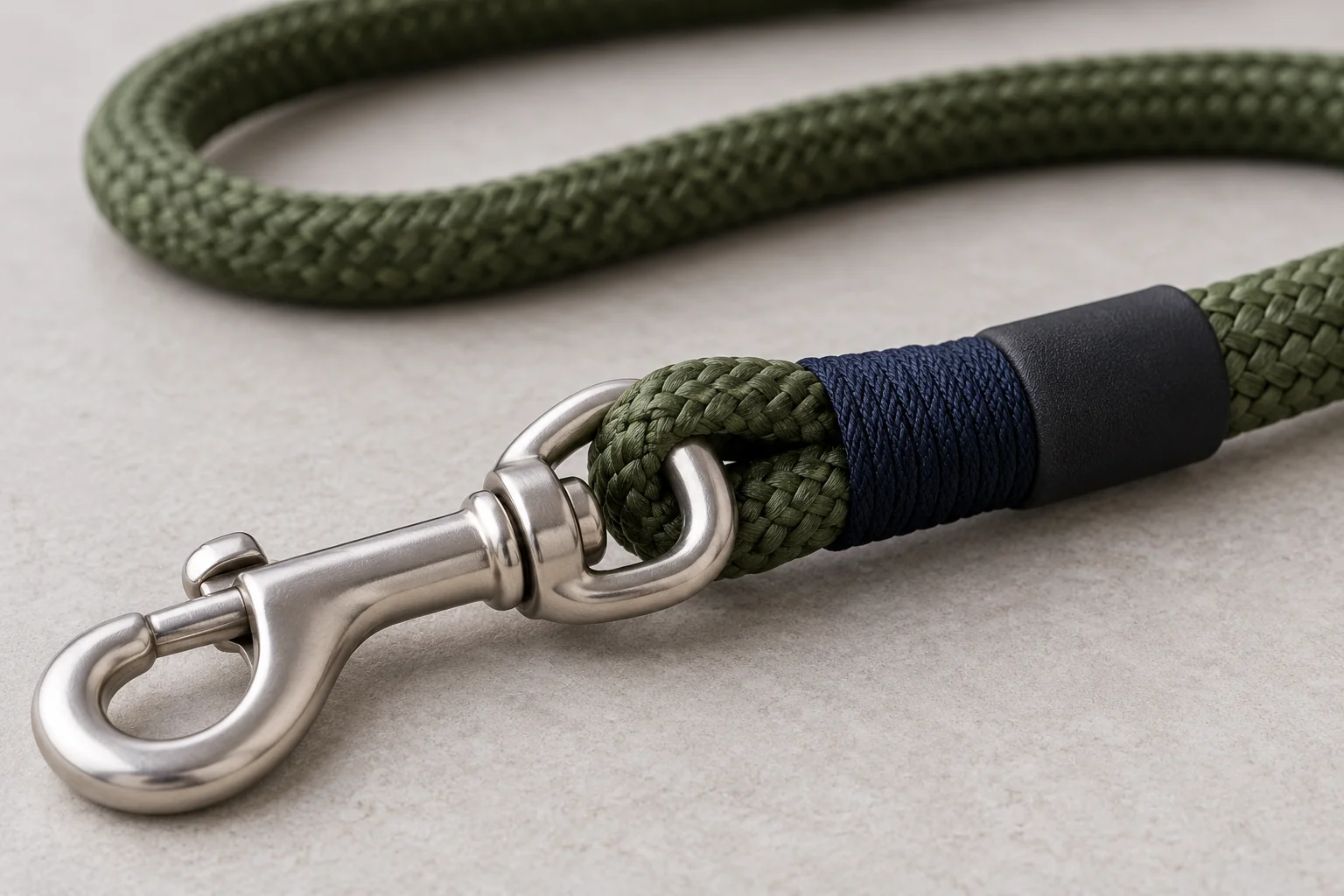
Request close-up photographs from several angles and, where practical, a view of the joint before the finishing cover is applied. Ask which components secure the rope and which ones mainly provide protection or appearance. If the construction cannot be described clearly, leave it unapproved rather than relying on the finished photograph.
Visible end treatment | What to ask before choosing it |
|---|---|
Thread wrapping | What is underneath the wrapping? Does the wrapping contribute to the connection or only cover and protect it? Ask to see the underlying joint. |
A stitched tab or sleeve | How is the rope held within the tab or sleeve? Request the joining details and a close-up reference that production and inspection teams can use. |
An external sleeve or molded cover | Is this part structural, protective or decorative? Ask how the complete joint is secured and what evidence applies to that exact construction. |
These visible treatments are not interchangeable joining methods or a ranking of strength. Their suitability depends on the rope, the underlying joint and the complete assembly.
How I would narrow down the connection options
I would choose a simpler-looking end finish with a clearly explained connection over an elaborate wrap hiding an unidentified joint. First, I would ask the supplier to show the underlying construction and explain how the load passes through it. If that cannot be established, the option is not ready for approval, regardless of how polished it looks.
Once the joint is understood, I would compare it on the proposed rope: does the braid bunch near the end, does the finish become uncomfortably stiff, and does the hook sit and swivel as intended? The complete assembly still needs any agreed performance evaluation. Only then would I decide among wrapping colors, sleeves or branded details on the basis of appearance and cost.
Check finishing and movement on the sample
Gently bend and coil the sample, then inspect both ends again. Note any movement in the wrap, bunching of the braid, shifting cover, exposed rough edge or unusually stiff transition. Photograph the location and describe what changed, rather than asking for the whole end to be made "better."
For example, feedback could read: "The sleeve moves away from the handle joint during the handling check. Please identify what is moving, explain the proposed revision and provide a revised finished sample." This describes an observation without guessing at its cause. The revised connection still needs the performance evaluation agreed for that design; a tidy finish or a sleeve that stays in place does not establish strength.
Review the handle separately from the hook end
Buyers sometimes spend more time inspecting the hook end because the metal component is visually prominent. The handle end can be just as important to the user's experience. A rope handle may be formed by bringing the rope back into a loop and securing the connection. The size of that loop affects comfort and ease of use. A narrow opening may feel restrictive. A very large loop may add unnecessary material and make the product less compact.
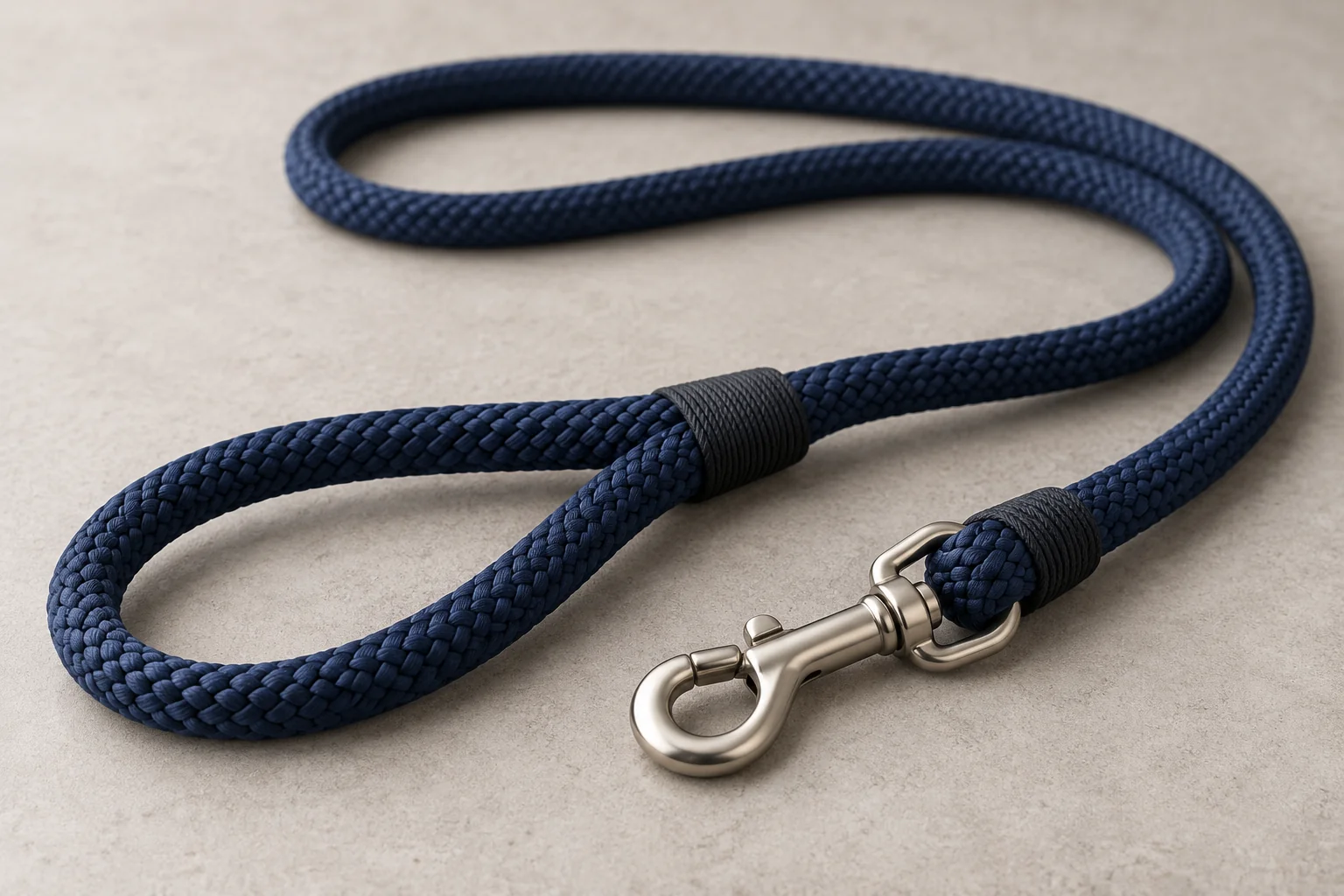
The joining area can also create a bulky section near the hand. If that area is too stiff or poorly finished, it may become uncomfortable during longer walks.
Do not automatically add more padding
Some brands consider adding a soft grip or sleeve to a rope handle. That may improve comfort in a particular design. However, padding adds material, changes the appearance, and may affect packing size or how the handle dries after getting wet. For a simple everyday rope leash, a well-finished handle without excessive padding may be the more sensible choice. For another product, padding may be worth the additional cost. I would make that decision after comparing real samples, not just because padded handles sound more premium in a product description.
Choose hardware with the rope attached
Hardware should be selected together with the rope construction. A hook that works well with one leash may feel disproportionately heavy or awkward with another. The attachment opening must also suit the way the rope end is formed and secured. When reviewing options, compare the hook's base material, dimensions, gate action, swivel movement, surface finish, and connection geometry. Make sure the hook is suitable for the intended collar or harness attachment.
It is possible for a rope leash to look substantial while using hardware that is not appropriate for the finished design. The opposite can happen too: a very large hook may make a relatively lightweight leash unnecessarily heavy.
Do not confuse appearance with performance
A polished metal finish can make a rope leash look expensive. But a shiny surface does not establish mechanical performance or corrosion resistance. If your target market requires particular performance evidence, define the applicable tests and acceptance criteria. When changes are made to the hook, review the complete rope-to-hardware connection again. Changing metal hardware can affect how the rope sits in the attachment and how the finished connection behaves. It should not be treated as a cosmetic decision.
Use sample comparisons to decide the next revision
Suppose Sample A feels soft and coils compactly, while Sample B feels firmer, has a different end sleeve and uses a heavier hook. Both are described as 10 mm braided rope leashes. Because several features differ, this comparison cannot tell you whether the rope, sleeve or hook caused the change in handling.
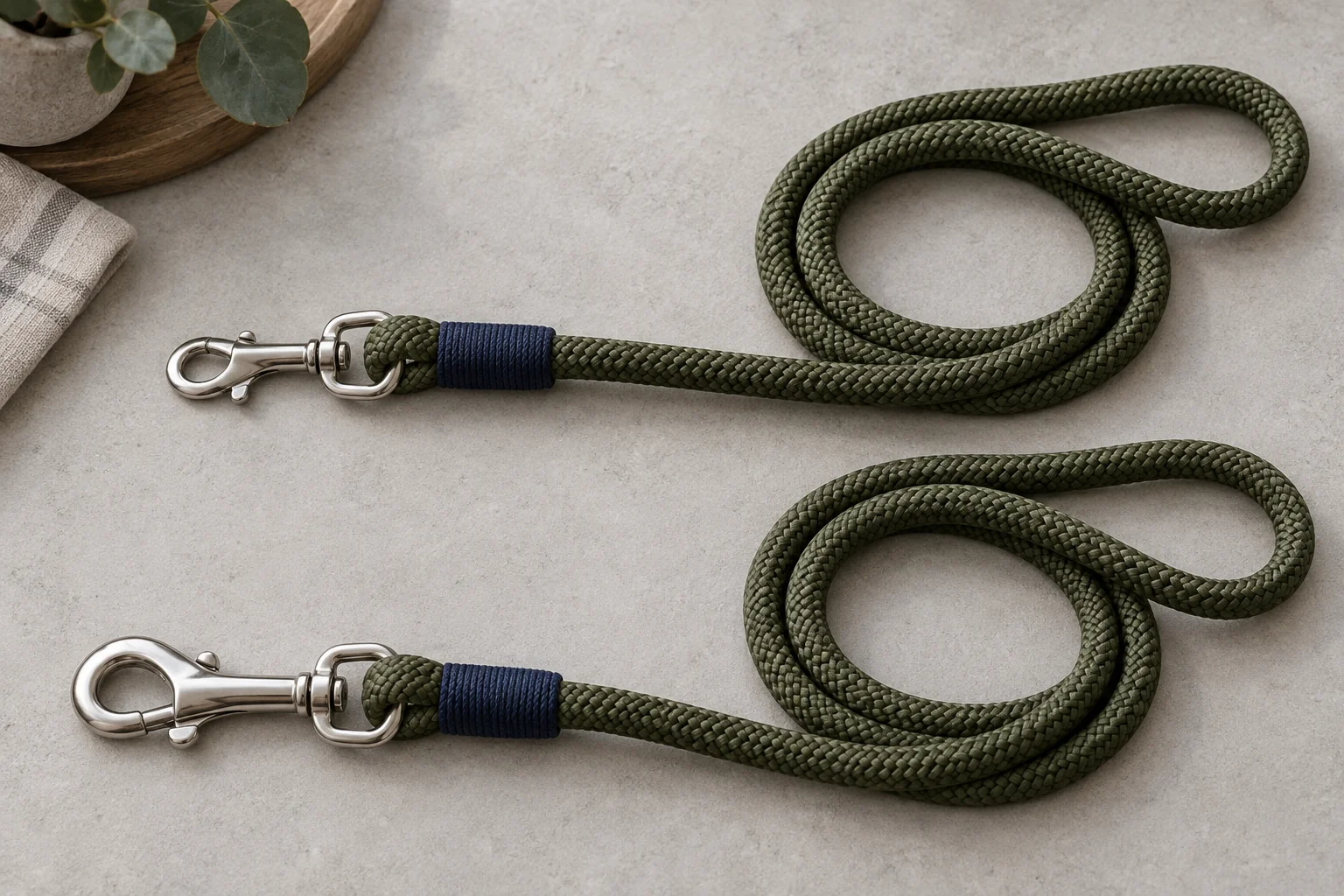
Begin by recording which features suit the target customer. If the brief is for a compact everyday leash, A may be the more useful starting point for handling. If the brief calls for a firmer feel, B may deserve further review. Neither preference is final approval: the end construction, hardware function, workmanship and required performance evidence must still be checked.
Turn a preference into a controlled revision
As an illustrative development exercise, assume you prefer A's rope but want to compare a different hook. Ask for the next samples as follows:
- Keep A as the labeled reference and record its rope, handle dimensions, end construction and existing hook.
- Request a comparison sample using the same rope and handle arrangement, changing only the candidate hook where the connection allows it. If a different joint is necessary, have the supplier identify that additional change.
- Compare overall weight, how the rope sits at the hook, gate and swivel movement, bulk at the connection and ease of coiling. Record specific observations beside each sample reference.
- Choose the next version from those observations and identify any revised connection details or performance checks still needed before approval.
Give the supplier one labeled reference version and a clear list of changes still open. That is easier to reproduce than a trail of separate messages.
Compare quotations for the same construction
A rope leash quotation needs more detail than length and diameter. Ask suppliers to price the same reference construction first, with unconfirmed items clearly marked. Then request separate prices for alternatives so you can see what each change adds or removes.
For example, one offer might cover standard rope, basic end finishing and bulk packing, while another includes custom wrapping colors, different hardware, a branded accessory and individual retail packaging. The higher quotation is not a like-for-like comparison until those differences are reconciled.
Compare | Ask the supplier to identify |
|---|---|
Rope | Fiber composition, material reference, diameter, braid construction and core or cover details where relevant. |
Dimensions and handle | Finished length, whether it includes the hook, handle opening, measurement method and agreed tolerances. |
End connections | Underlying joining construction, components, wrapping or sleeves, finishing and approved reference photographs. |
Hardware | Hook model, dimensions, base material, finish and swivel design. |
Branding and packaging | Color references, logo method, accessories, setup requirements, retail or bulk packing, barcode and carton arrangement. |
Order and delivery scope | Quantity per size and color, currency, delivery basis, timing and the approvals that start the production lead time. |
Separate charges | Sampling, setup, testing, freight and other charges not included in the quoted product price. |
Before ordering, make sure the price corresponds to the selected rope, joint, hardware and packing arrangement. An attractive unit price is not comparable until the specifications match.
Reduce cost without quietly changing the connection
Rope leashes can carry custom wrapping, decorative sleeves, special metal finishes, leather patches and premium packaging. All can support a brand, but all add cost. If a quotation exceeds the target, I would first ask what the customer will actually notice or value.
A standard finish may be perfectly appropriate; a simpler retail card may still present the product well. I would compare those options before asking to change an approved structural connection.
That is not an argument for always choosing the most expensive rope or hook. It is a way to separate lower-risk cosmetic decisions from changes that may affect the assembly and require new evaluation.
Record what sample approval does and does not cover
Inspect the complete leash, working from the rope body to the handle and hook. Look for uneven braid, loose yarns, irregular sections and surface defects. Compare dimensions using the agreed method, examine how the rope bends near each joint, operate the gate and swivel, and compare colors and finishes with the selected references.
For wrapping, sleeves, labels and other details, check their position after gentle bending and handling. Keep feedback tied to an identifiable sample and location. "The cover shifts at the hook end" is more useful than "the quality needs improvement."
Keep appearance approval separate from performance approval
A comfortable handle and clean finish do not establish the strength of the finished assembly. Where mechanical performance needs verification, agree with the supplier and a suitable testing provider on the assembly version, test method, loading conditions, sample quantity and acceptance criteria. A rope-material report alone does not establish the performance of its handle and hook connections.
Keep a record of the exact sample version, rope and hardware references, dimensions, connection photographs, colors and packing. List appearance approval and pending testing separately; do not call a sample fully approved while required evidence is outstanding.
Before authorizing bulk production, resolve any open items affecting the final construction, required performance evidence or agreed acceptance criteria, and confirm the exact version to be manufactured. For any remaining administrative or scheduling items, record who is responsible, the due date and which sizes, colors or orders are affected. Tracking an unresolved requirement is not a substitute for obtaining the approval needed to proceed.
Keep the approved construction consistent in production
A good development sample establishes what the buyer expects. The next challenge is reproducing it during production. With rope leashes, variations may appear in the braid, fiber handling, wrapping tension, end finishing, hardware attachment, or overall dimensions. Some differences may be cosmetic. Others may affect handling or the finished construction. That is why the supplier should have a clear reference for the approved rope and connection method. Keep the selected material reference, dimensions, color, hardware model, and end-construction details with the sample approval record.
Be careful when a supplier proposes a substitution
Suppose the approved rope is unavailable and the supplier offers another rope with the same nominal diameter and color. It may look almost identical. The matching description is not enough to approve the substitution. I would first compare the fiber composition, braid construction, core arrangement where applicable, flexibility, and how it works with the approved end connection. A different rope can behave differently even when the diameter is unchanged. The same caution applies to changes in wrapping materials, sleeves, or hooks.
The replacement may work, but document the decision against the finished design rather than approving a similar-looking part by message alone.
Review branding and packaging before fixing the price
Rope leashes already have a strong visual identity. The braid, colors, texture, and metal hardware create much of the product's appearance. For that reason, I would be careful about adding too many decorative accessories. A large logo patch, heavy sleeve, custom metal tag, and contrasting wrapping might each look attractive individually. Together, they can make a simple rope leash feel overcrowded. Sometimes the better product is the one with fewer details.
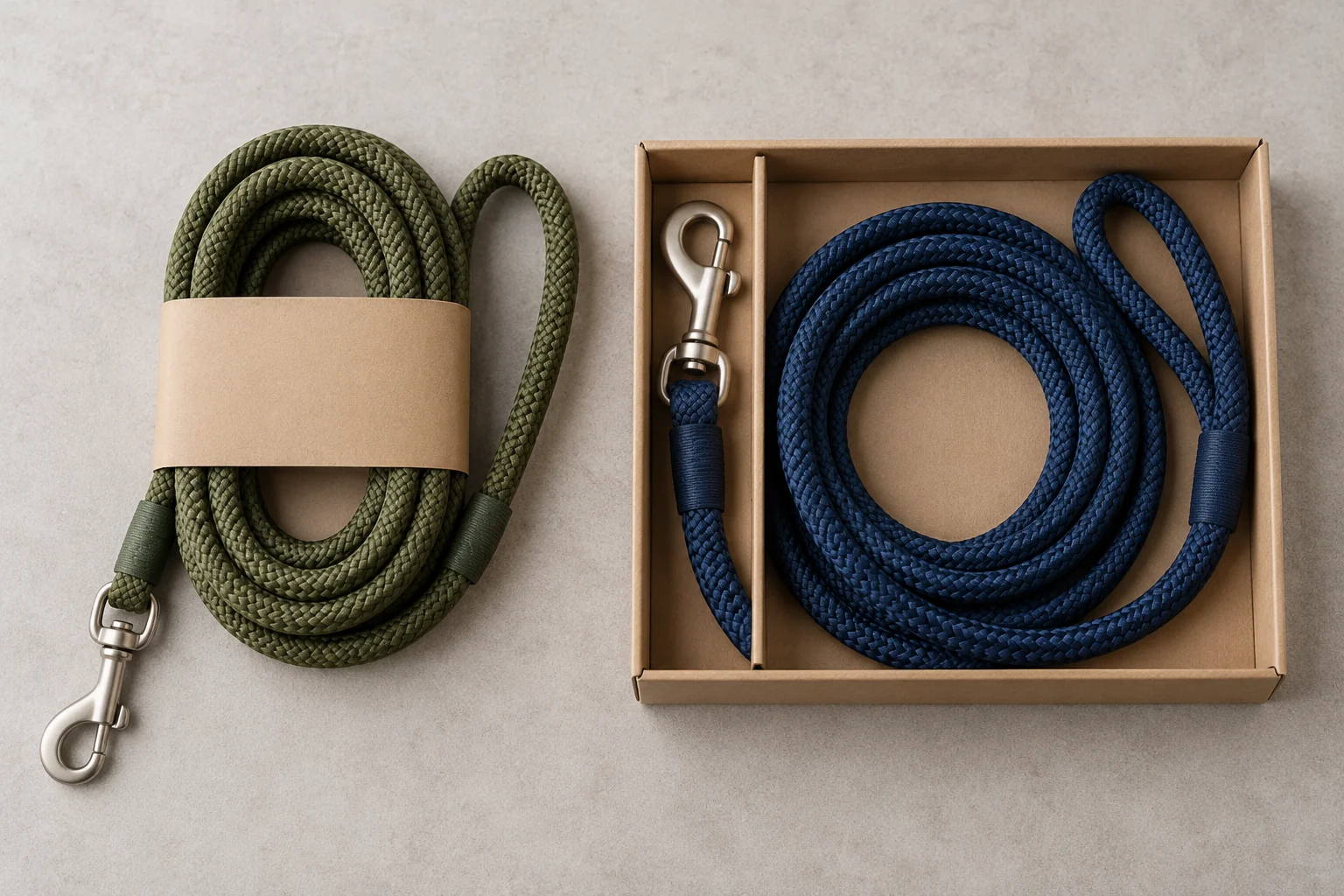
If the brand wants a recognizable appearance, a consistent rope color pattern and restrained branding may create a cleaner collection than multiple competing accessories. That is a design judgment, not a universal rule. The target customer and brand position should guide the final choice.
Think about packaging before the price is final
Rope leashes may be coiled for retail presentation, but the rope's firmness and diameter affect how compactly the finished product can be arranged. Hardware can also press against other surfaces during packing. If the leash has decorative sleeves or premium-finished components, think about whether those details need protection. A retail card, paper sleeve, pouch, or box can all be considered depending on the sales channel. The important point is to include the intended packaging in the quotation and sample approval process.
Packaging decided late can undermine the presentation of an otherwise well-made leash.
Developing a Custom Rope Dog Leash? Let’s Talk.
Have a rope leash design in mind but are unsure about the braid, diameter or end connection? Maybe you have a reference leash that looks right but feels too stiff, or a sample whose wrapping or hook end you would like to improve.
A first message can be as simple as:
“We like this braided rope leash, but we are not sure which rope construction or hook-end finish would suit our retail range. Could you explain a few options if we send you a photo?”
Send AGL a reference image, sketch or a short description of what you are planning. We can discuss the relevant construction and customization choices, then clarify details such as quantities, sampling and quotation as the design develops. You do not need a complete specification to start—a photo and a short message are enough.
Your Reliable Pet Products Partner
Tell Us About Your Pet Product Project
Sample Evaluation
Confirm sample availability, any charges and freight before reviewing the product.
OEM Customization
Review product-specific branding, material and packaging options before sampling.
Production Planning
Agree on production lead time and shipping handover after sample approval.
Responsive Support
From initial consultation to after-sales, we’re with you in every step.