Adjustable Dog Leashes for Wholesale Buyers

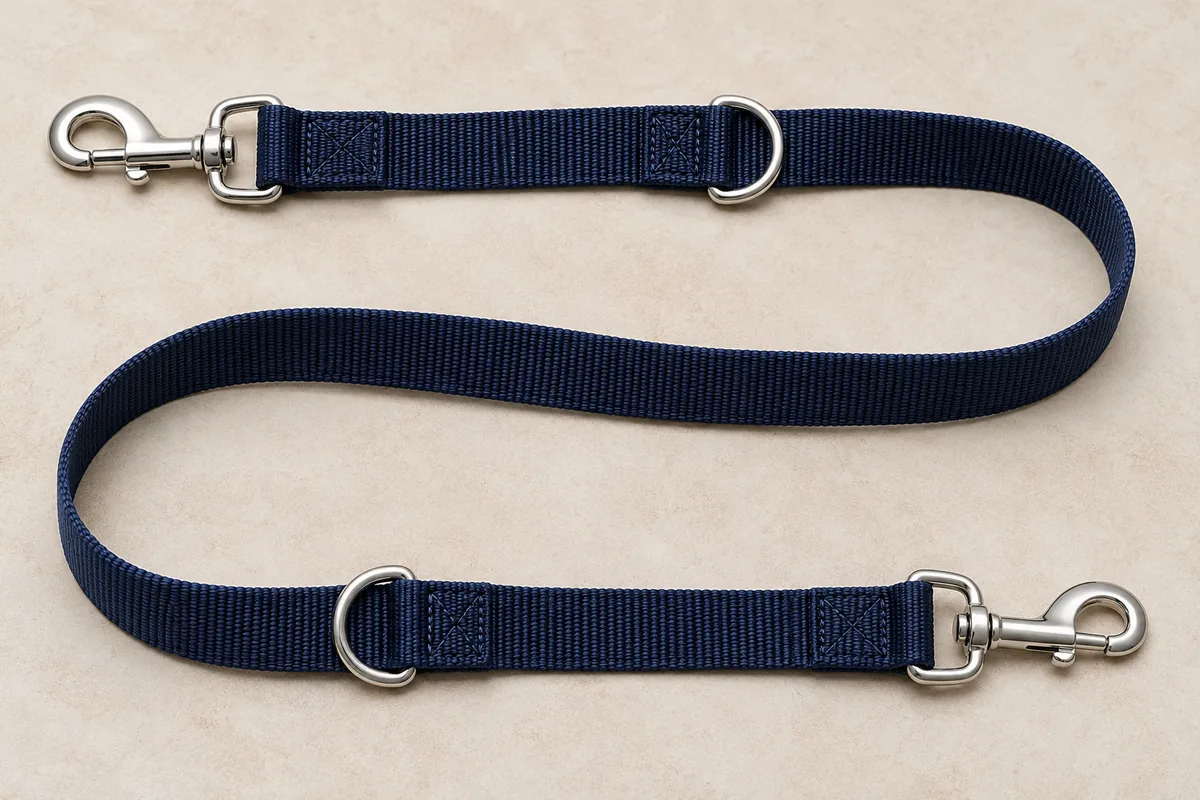
Navy adjustable dog leash laid flat with two silver snap hooks and two sewn D-rings

Table of Contents

If a supplier quotes a 200 cm adjustable dog leash, ask where that measurement starts and ends. It could be the length of the leash laid flat or the usable length with the hook clipped into a working position. Ask for a photo and a measured length for each setting before comparing quotes.

For a wholesale or private label range, start with how the customer will use the leash. Pick the settings that matter, then specify the lengths, hardware and sample checks for those settings.

Choose the Right Adjustable Leash Design

What your customer needsDesign to reviewWhat to check first
Two or three distinct lengthsA ring-and-hook design with defined clip positions.Try the short setting. Check where the spare strap and unused hook sit.
Fine adjustment within a length rangeA sliding adjuster matched to the chosen webbing.Try adjusting the finished sample and check whether the setting holds under the agreed test conditions.
Hands-free walkingA waist-worn or crossbody configuration with a suitable adjustment system.Check wearer fit, how the attachment releases and how much leash remains between the wearer and the dog.

If customers mainly switch between a short city-walking setting and a longer everyday setting, start with those two. On the sample, check how easily the hook moves between rings and where the spare strap sits in the short setting.

What to Send for a Quote

Start with a reference photo, link or sketch. Mark the settings you want, especially the shortest one. Copy these fields into your enquiry and fill in what you know.

  • Reference and intended use: [photo, link or sketch] and [how customers will use it]
  • Settings: [short and long working lengths, or how the leash should be worn]
  • Order: [estimated quantity or range] and [target market]
  • Preferences: [webbing, hardware, logo or packaging details already decided]

Not Sure Which Adjustable Design Fits Your Range?

If you are still choosing a design, use the checklist above and tell us which settings your customers need. A reference link or a short description is enough to start.

Discuss Your Adjustable Leash Project

Specify the Length at Each Setting

For a ring-and-hook design, draw the long, short and any intermediate settings. Mark the clip point in each sketch. If your customer plans to change lengths often during a walk, ask the supplier to show how the hook moves from one ring to the next.

A waist-worn or crossbody leash may use rings, a slider or both. Some of the strap goes around the wearer, so record the wearable fit range and the remaining usable length separately. For a reel-based retractable leash, the reel and brake require their own review.

MeasurementWhat to put on the drawing
Overall lengthDefine the start and end points with the leash laid flat, including whether the hooks count.
Working length in each settingMark the grip or wearer connection and the dog-end attachment in each clipped configuration.
Ring position and handle openingMeasure each ring from the same marked end and record the usable space inside the grip.
Waist or crossbody fit, if applicableRecord the fit range and the usable leash length left at the wearer settings you plan to offer.

Agree how to measure the assembled sample and what variation is acceptable. Use those same measurement points when you check the sample and compare quotations.

Match the Hardware to the Webbing
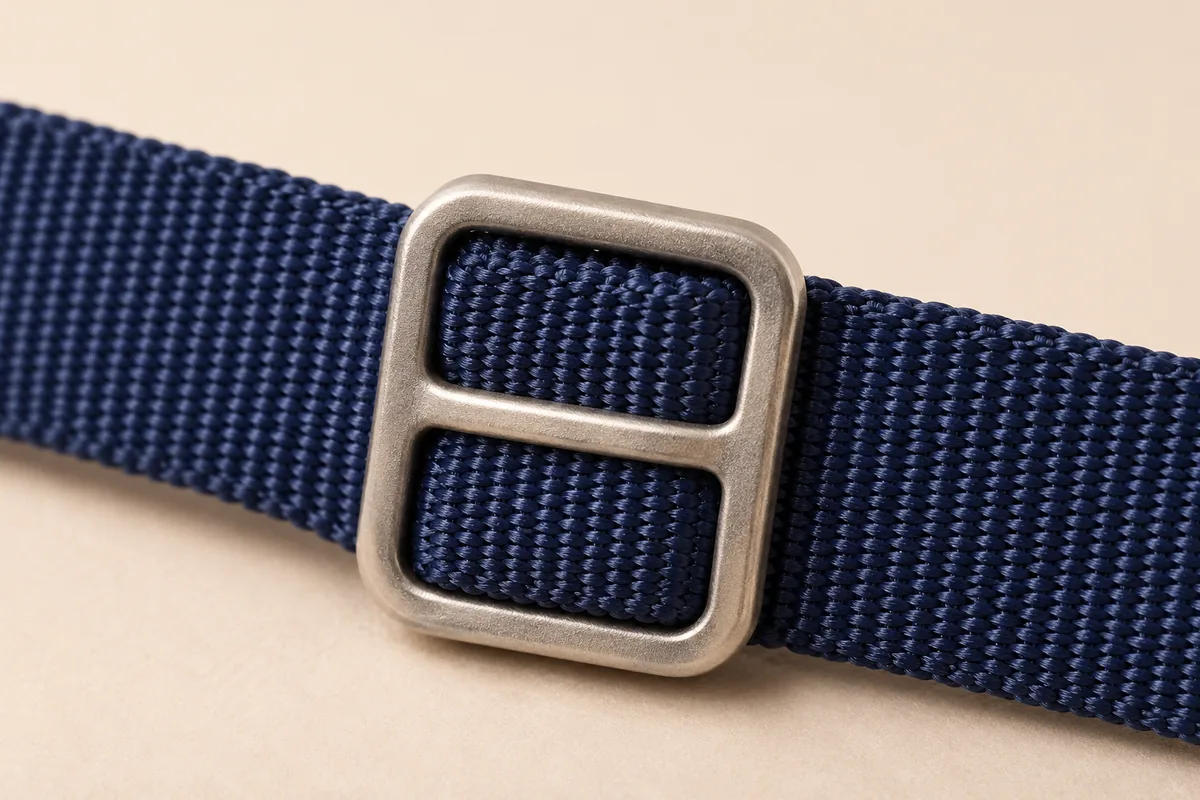
Close-up of a silver slide buckle threaded onto navy dog leash webbing

Try the actual hook and ring together. Check that the gate clears the ring, the hook swivels freely and the fittings sit where you can reach them. In the short setting, hold the leash where a customer would grip it and check whether a spare hook presses against your hand.

A larger hook can make the product look more substantial, but the customer also carries that weight in every setting. Before selecting heavier hardware for its appearance, try the complete leash in both the shortest and longest positions. The better choice is the component that suits the intended arrangement and any verified performance requirements—not simply the largest option.

For a slider, check how the selected webbing feeds through the fitting, folds back and holds its position. Width, thickness, texture and stiffness can all change the fit. Review nylon or polyester in the assembled sample, especially if the design folds several layers of strap through the same fitting.

For more on strap selection, see the dog leash materials comparison and the nylon webbing buying guide.

Compare Quotes Using the Same Specification

Send each supplier the same drawing or reference and ask them to quote against that version. If one price is lower, check the number of hooks and rings, the webbing dimensions and finish, and the packaging included. A price based on one hook and a plain hangtag cannot be compared directly with a price for two hooks and a branded retail pack.

Ask for the minimum order quantity, sample fee, lead time and any separate charges for artwork, setup or packaging. Confirm whether the price and minimum quantity apply to the whole order or to each colour or variation. Treat the price as indicative while the construction or packaging is still being decided.

Approve the Assembled Sample Before Bulk Ordering
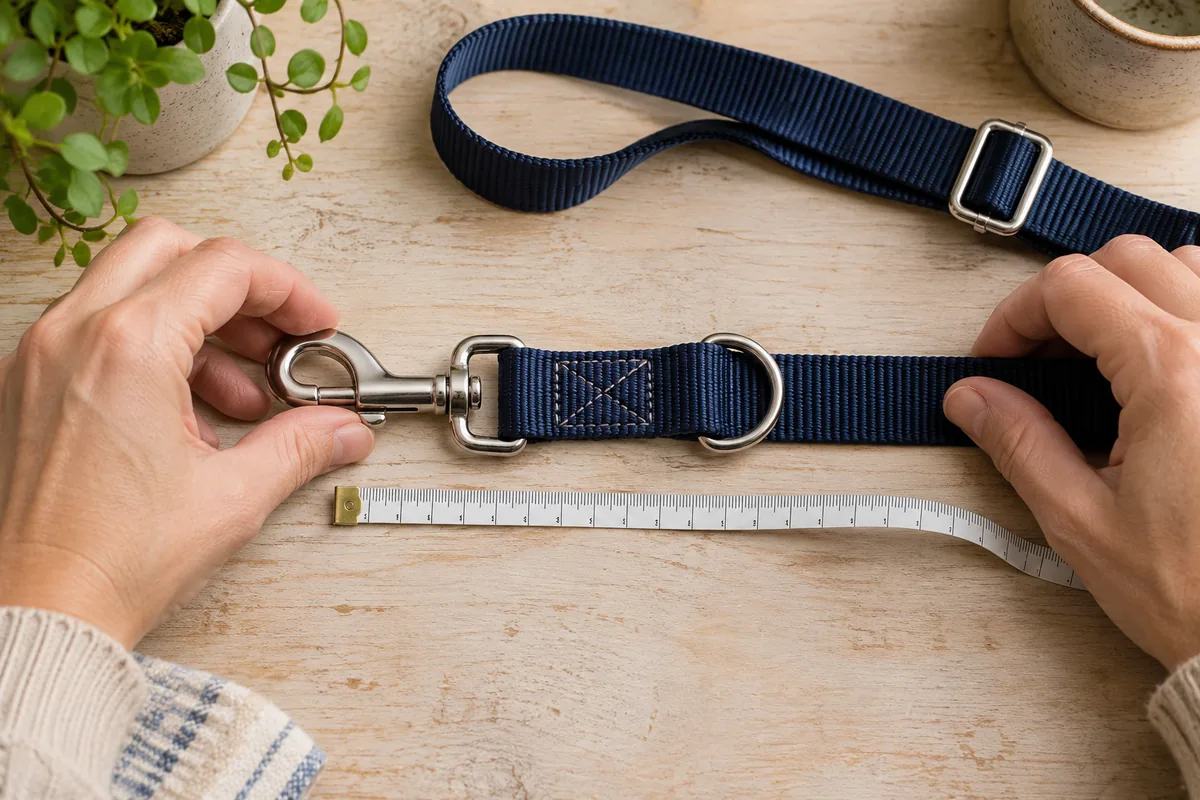
Hands checking a navy leash sample beside a measuring tape, with the snap hook and sewn D-ring visible
What to checkHow to review it
Every proposed settingMeasure the working length, try changing settings and handle the leash in each position. Check the grip, spare strap and hardware placement.
Sewn joints and contact pointsInspect the handle, hook end and ring attachments for uneven folds, distorted webbing, loose threads or rough spots where metal meets the strap.
Logo and retail packagingCheck that the logo is visible in the intended settings and stays clear of the slider. Review the hangtag, barcode and instructions if these are part of the order.
Evidence for performance claimsAsk which assembled configurations were tested, which sample version was used and what acceptance criteria applied.

A webbing or hook test report covers that component. For claims about strength or durability of the finished leash, ask for evidence covering the relevant assembled configurations. Raise any retailer or destination-market testing requirements before ordering. If the design uses a proprietary fitting or locking mechanism, flag it during sourcing so any licensing questions can be resolved before the order.

Record the approved sample version, drawing, measured lengths, hardware and packaging. If the hook, ring position or webbing changes, repeat the checks affected by that change before approving the revised sample.

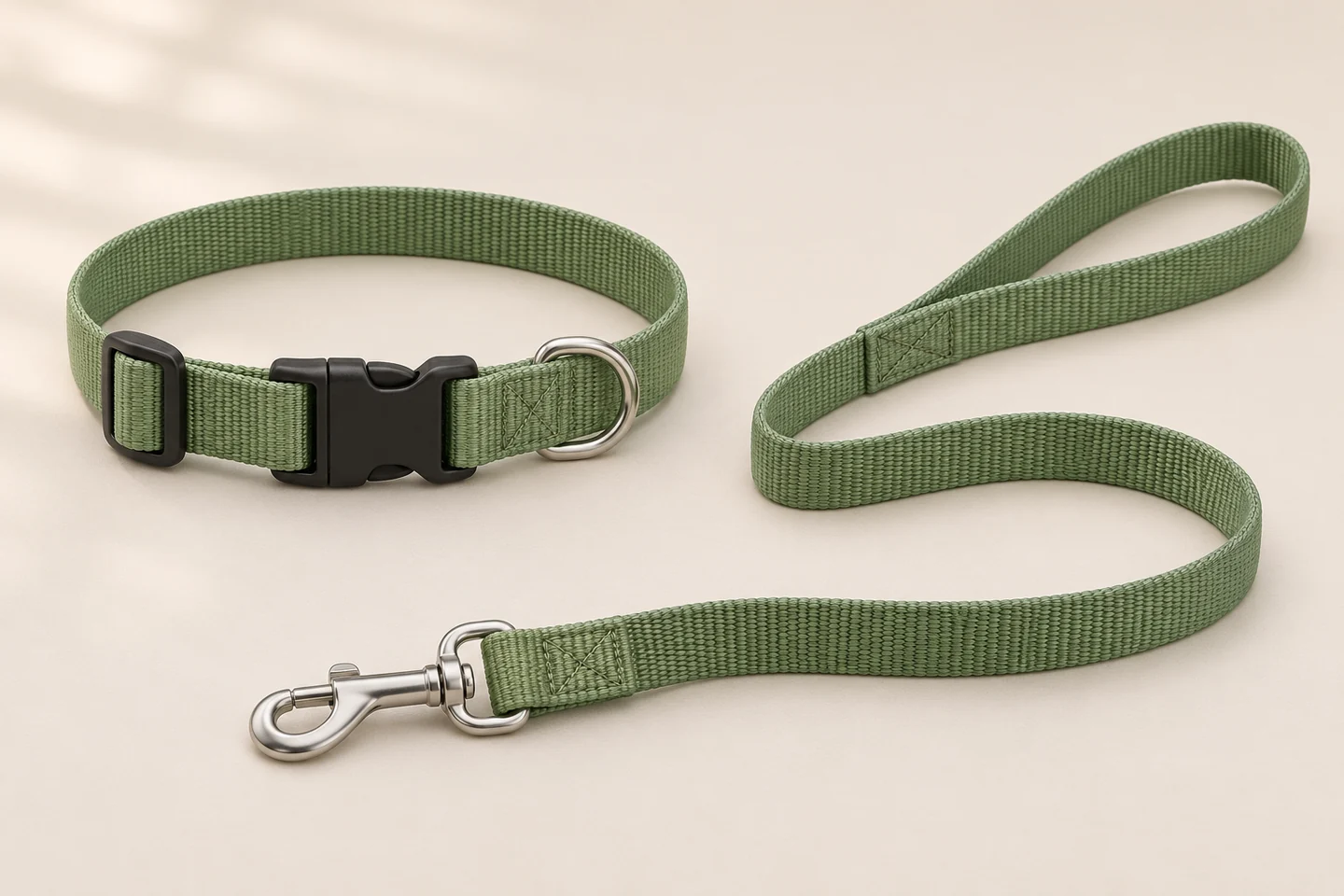
Discuss Your Adjustable Dog Leash Project With AGL

Send AGL your reference link or a short description, along with your estimated quantity and target market. We’ll review the settings you need and tell you what we still need to confirm before quoting.

Send Your Adjustable Leash Enquiry

Your Reliable Pet Products Partner

Factory warehouse storing and packing assorted pet products for shipment
We supply a wide range of pet products for brands, wholesalers, and retailers worldwide. From product customization and packaging to bulk orders and shipping, we provide flexible OEM/ODM solutions to support your business.

Tell Us About Your Pet Product Project

Sample Evaluation

Confirm sample availability, any charges and freight before reviewing the product.

OEM Customization

Review product-specific branding, material and packaging options before sampling.

Production Planning

Agree on production lead time and shipping handover after sample approval.

Project Follow-up

Use the same email thread to share sample comments, artwork revisions or order questions.